Section 1 of 5
Water
Where it sits, and what it costs to move.
The water register
Entry, what it turns on, reading time.
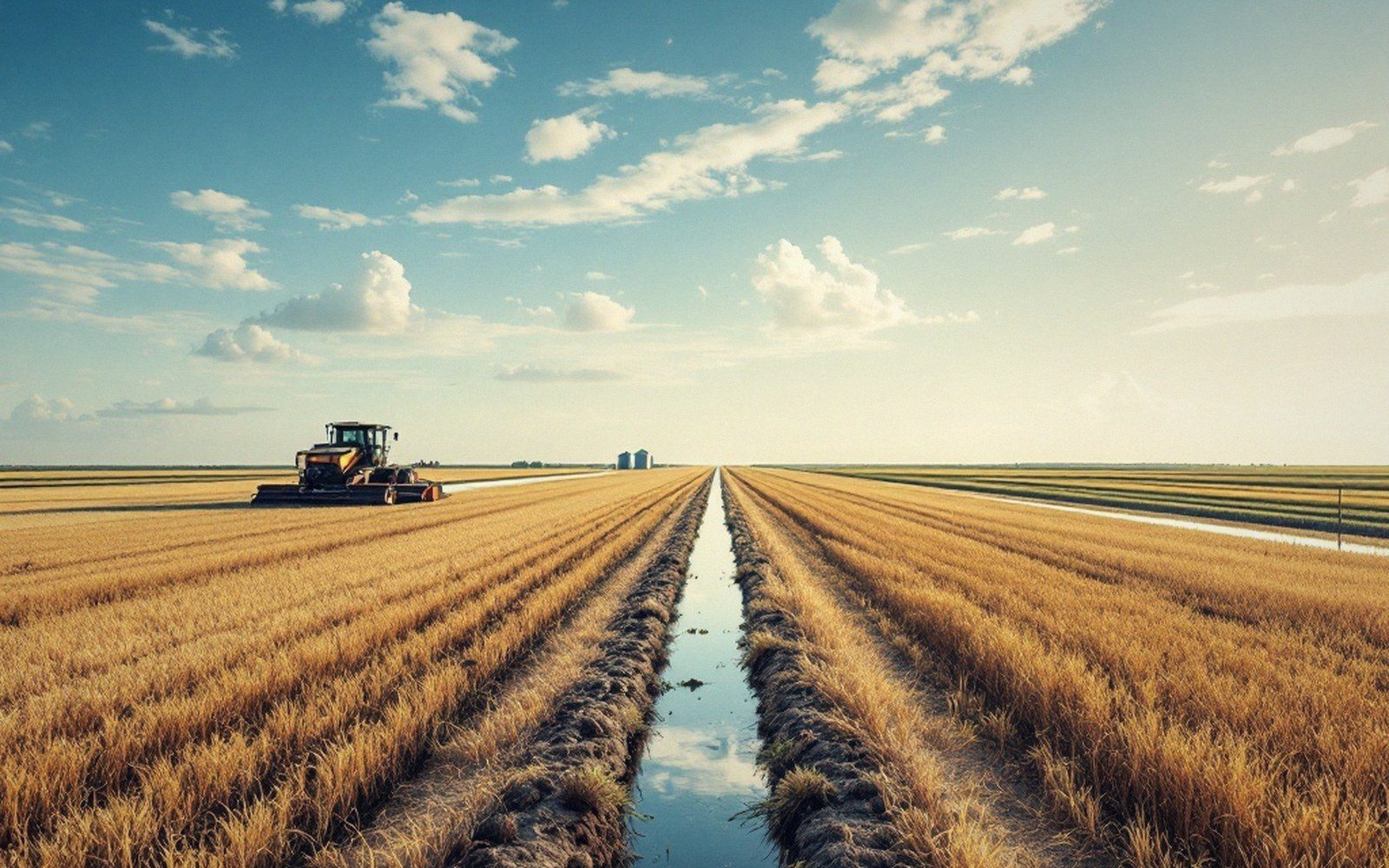
- Dead level is a measurementRice ground is cut to a fall of a tenth of a foot or less across a whole field, because the crop is grown standing in water and every low corner is a drowned one. What that tolerance costs to establish and what it buys.0.1 ft across the bay6 min
- The aquifer is a balanceThe alluvial aquifer is drawn on faster than it refills over much of the Delta. What the cone of depression looks like and what it does to lift.30–50 ft of drawdown4 min
- Lift is the billEvery foot the water is raised is fuel. The arithmetic that decides whether a well or a ditch is cheaper.40–60 ft against 4–8 ft2 min
- Tail-water recoveryCatching what runs off the bottom of the field and sending it back to the top.A third of the water pumped2 min
- ReliftA second pump doing nothing but moving water sideways, and why it earns its place.A few feet of static head2 min
- Flood and furrowTwo ways to wet a field. What each spends in water, labour and levelling.Tenths of a foot, or a slope3 min
- When the well runs sandThe screen, the gravel pack, and the failure that ends a season.Sand, in parts per million2 min
Elsewhere in the register