A tolerance, not a flatness
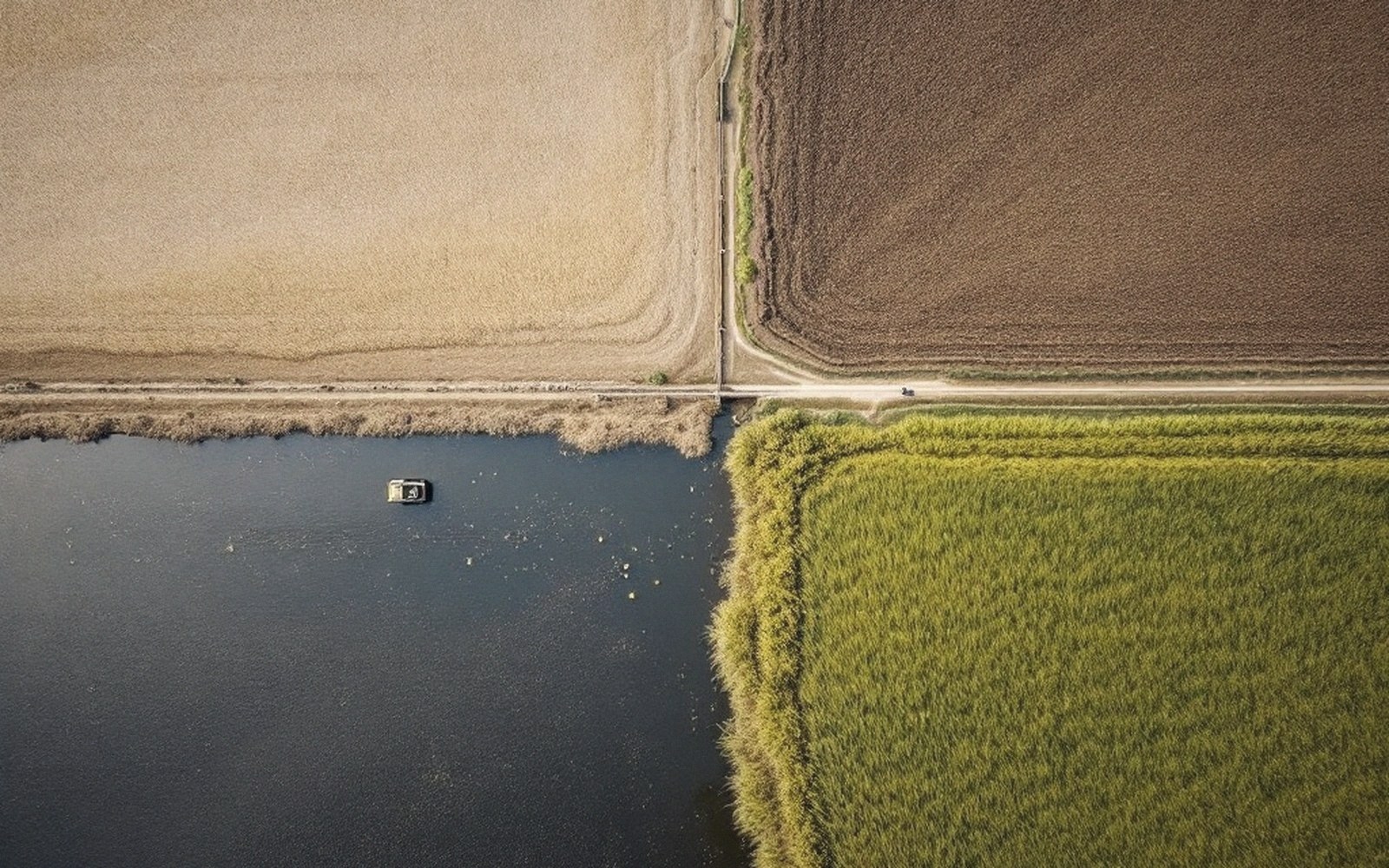
The phrase "dead level" earns its first word. Cut a rice field wrong — let it carry two-tenths of a foot of variation where it should carry a tenth or less — and the water that floods it will find the low corner before the rice does. That corner drowns. The high corner emerges, dries, and loses the flood's weed suppression. The whole point of standing water as a management tool collapses into a patchwork of wet and dry, and the field never performs as a unit.

Dead level is not, strictly speaking, flat. It is a tolerance: a maximum allowable deviation across the whole bay, measured in tenths of a foot rather than inches, enforced by a laser-guided scraper making passes until the instrument says the job is done. What the grower is buying is uniformity of water depth — so that when the flood is set at four inches, the deepest point is not at eight and the shallowest not at zero. The arithmetic is unforgiving because rice is an unforgiving plant in this respect: too shallow and the weed window opens; too deep and the young tiller drowns before it tillers.
On a field with genuine relief, achieving this tolerance requires removing earth from high ground and placing it on low ground in proportions that, ideally, balance — the central constraint of any laser-levelling job. Cut without filling, and you expose subsoil. Fill without cutting, and you bury the seed-bed under displaced topsoil that may not drain, consolidate, or support root development the way the original surface did. The laser plane is set not at absolute zero slope but at the minimum grade that allows the field to drain when the time comes, typically a slope of a tenth of a foot per hundred feet or less along the direction of drainage — just enough fall to move water toward the outlet structure without letting it race through and undercut the bay.
What the tolerance costs to establish
The cost lives in three places: the survey, the dirt-moving, and the settling that undoes both.
The practical answer is a touch-up grade every few years, which is why precision levelling is not a one-time capital cost but a recurring one.
A laser-levelling survey establishes a reference plane using a rotating laser transmitter and a receiver mounted on the scraper blade. The transmitter sets a plane across the field; the receiver detects the cut or fill signal and, on a hydraulic control system, raises or lowers the bowl of the pan scraper automatically. The precision of that plane depends on the stability of the transmitter and the flatness of the receiver mast — move the machine, reset the transmitter wrong, and the plane shifts. The whole field is then graded to a ghost surface that does not match the drainage outlet. Modern GPS-guided systems use a base station to maintain the reference independent of transmitter repositioning, reducing this error on larger or broken fields, but the base station itself must be set correctly and held fixed throughout the job.
Dirt-moving cost scales with the cut-to-fill ratio and the haul distance. A field with a large natural cross-slope requires more passes, more fuel, more blade wear, and more time. Where topsoil is thin — common on the higher, sandier soils at the eastern edge of the Delta — cutting through into the B-horizon means working with material that has different compaction behaviour, different water-holding capacity, and often lower fertility. The operator must decide, sometimes mid-pass, whether to feather the grade or accept a subsoil exposure that will cost yield for years.
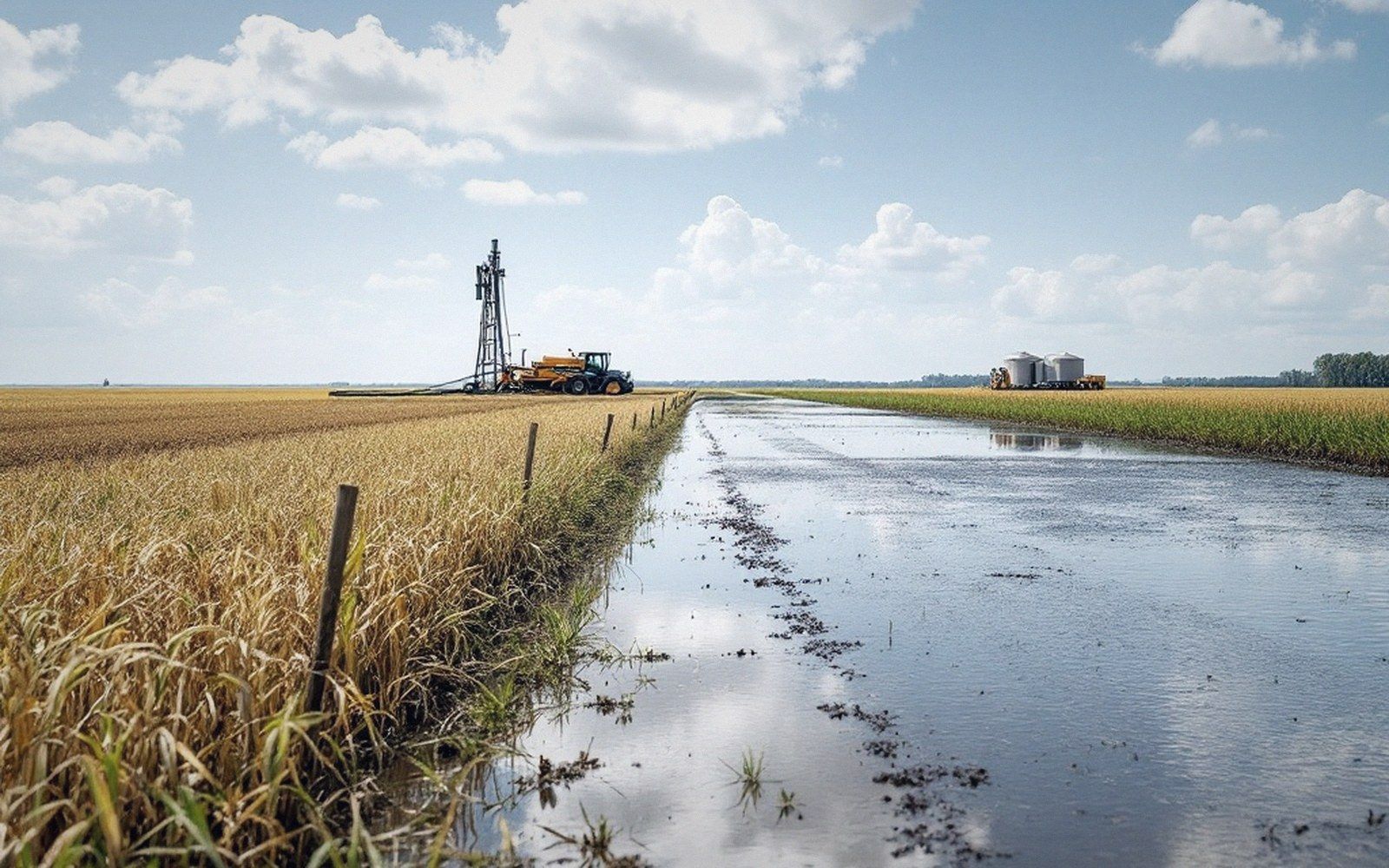
Then the ground moves. Fresh-cut soil that has been loosened, displaced, and re-compacted by equipment is not the same as undisturbed soil. The first wet season pushes water into pores and voids left by equipment traffic; the soil consolidates; the surface settles unevenly because the degree of disturbance was uneven. A corner that was cut lightly settles little. A low area that received two feet of fill settles more. By the second or third season, the field has drifted measurably from the laser plane — sometimes within the tolerance, sometimes not. The practical answer is a touch-up grade every few years, which is why precision levelling is not a one-time capital cost but a recurring one.
What the tolerance buys
Precision grade earns its cost in water. A well-levelled rice bay can be flooded uniformly to a shallow depth — four to six inches rather than the six to ten inches a poorly levelled field requires to cover its high spots while keeping its low spots from drowning. Shallower water means less volume pumped per acre, less drawdown on the alluvial aquifer, less lift energy paid per season. On a farm running multiple wells across several hundred acres, the difference between a properly graded field and a degraded one is measurable in pump hours and fuel invoices.
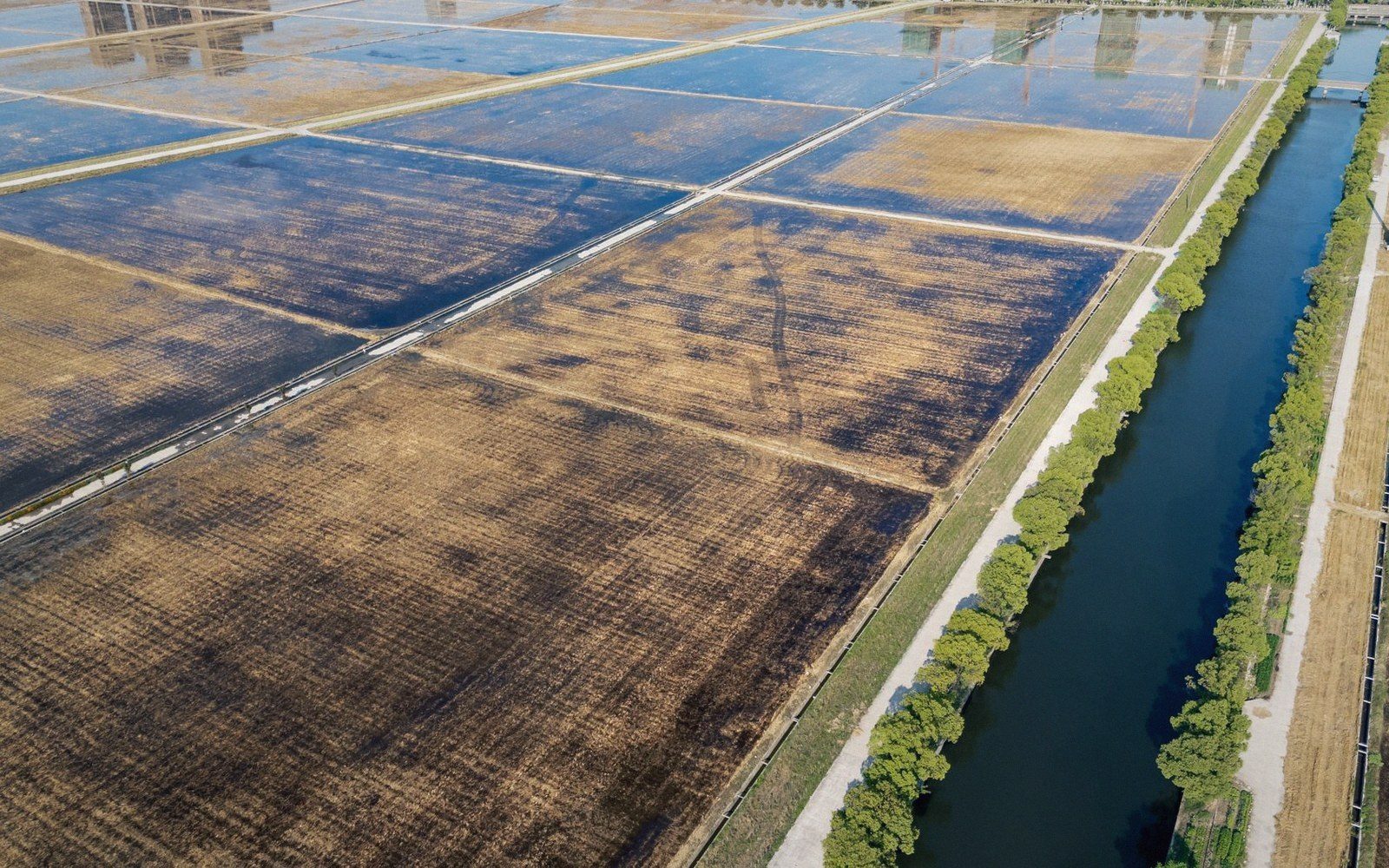
Water control also becomes simpler. On a level bay, a single inlet structure and a single outlet can manage the flood as a unit. The grower sets the water, reads one depth, and makes one adjustment. On an uneven field, managing by average depth means accepting that some portion of the crop is always wrong — too deep or too shallow — and the manager is perpetually chasing a moving target that cannot be hit because the ground itself prevents it. Levelling is, at its root, a simplification of the control problem.
The flood's functions beyond irrigation — thermal buffering of the panicle during critical heading nights, suppression of weed seedlings that cannot germinate under standing water, and restriction of the red rice population that would otherwise compete directly with the crop — all depend on the flood being maintained as a continuous, managed layer. A field that cannot hold a uniform flood cannot use that flood as a tool. It becomes a liability: standing water in the low corners that cannot be drained quickly when harvest timing demands it, bare ground in the high corners that carries weed pressure and loses yield.
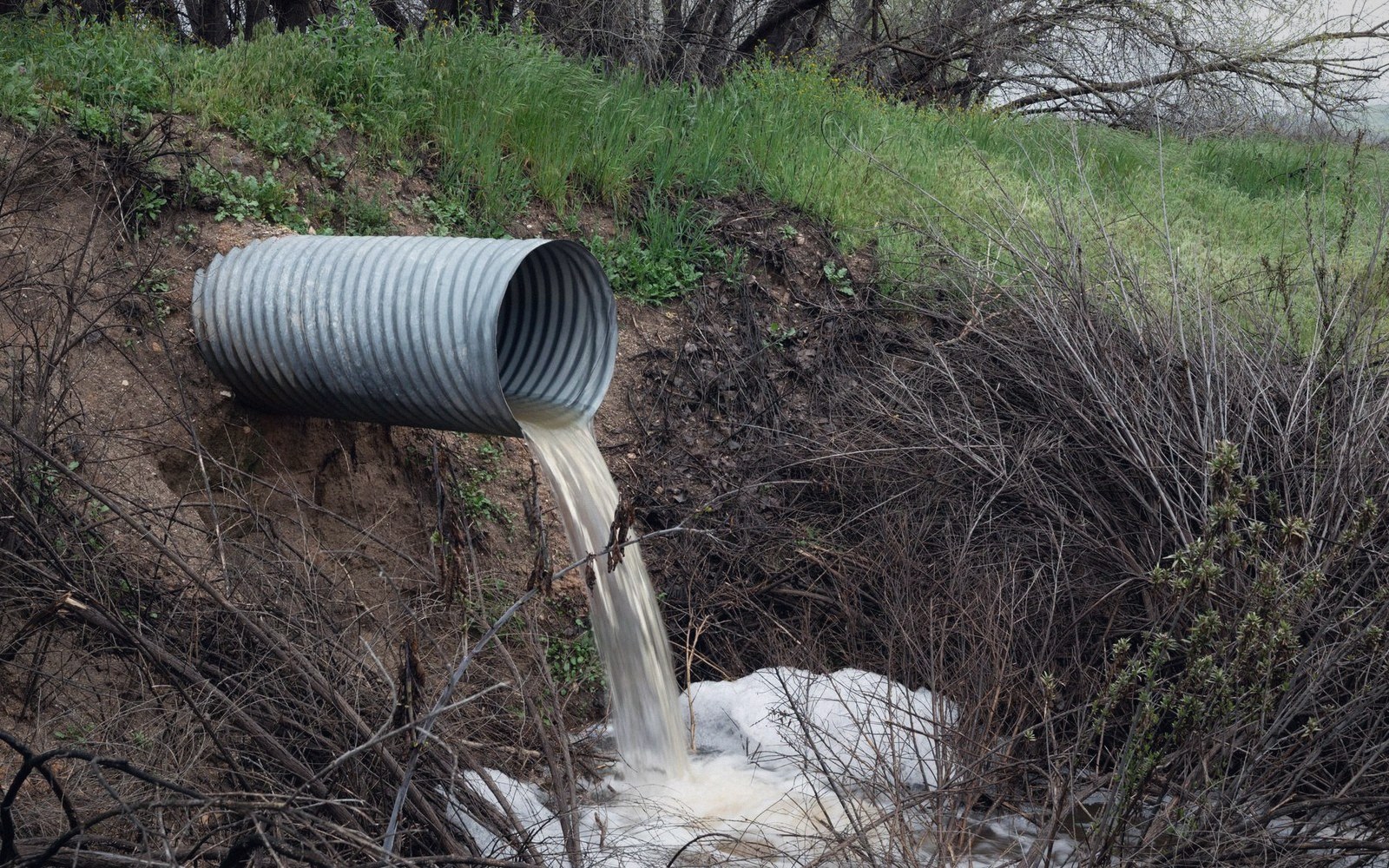
The tenth-of-a-foot tolerance is, in the end, a precision specification for a water-delivery system. The field is the system. Dirt is the infrastructure. The laser plane is the engineering drawing. When it is right, the grower is moving water predictably across a surface that was built for exactly that purpose; when it drifts, every season is a negotiation between what the pump puts in and what the ground will accept. Dead level is not a poetic name — it is a number, hard-won and perishable, and the whole management logic of flooded rice rests on holding it.