Two ways to wet a field — and what each one costs
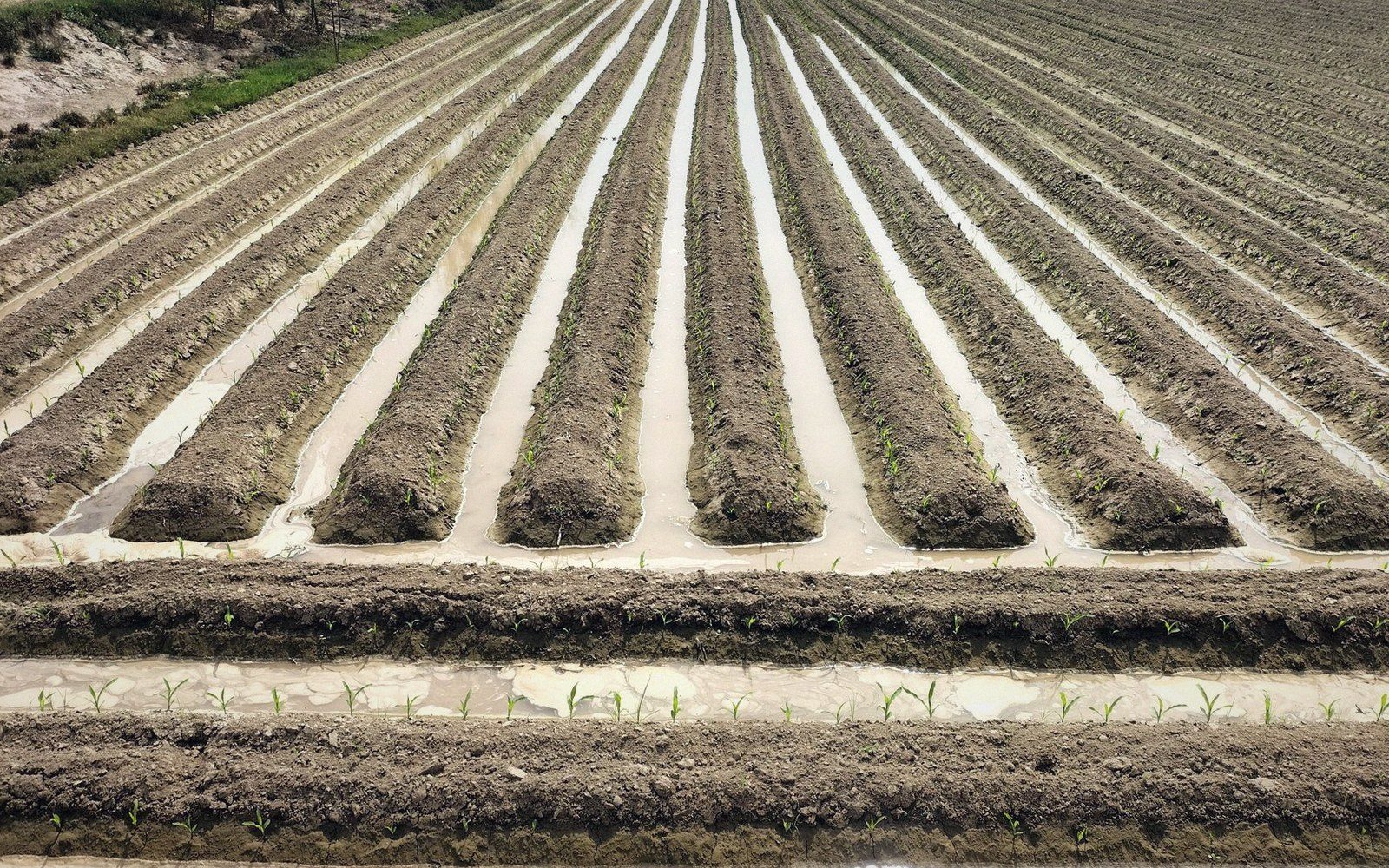
Irrigating a row-crop field in the Delta comes down to two fundamentally different ideas. In flood irrigation, water is turned into a level bay and simply stands there until the soil drinks it. In furrow irrigation, water is run down the channels between rows and soaks in sideways as it moves. Both methods are old. Neither is simple. And each one trades off against the other in water volume, field preparation, labour, and recovery.
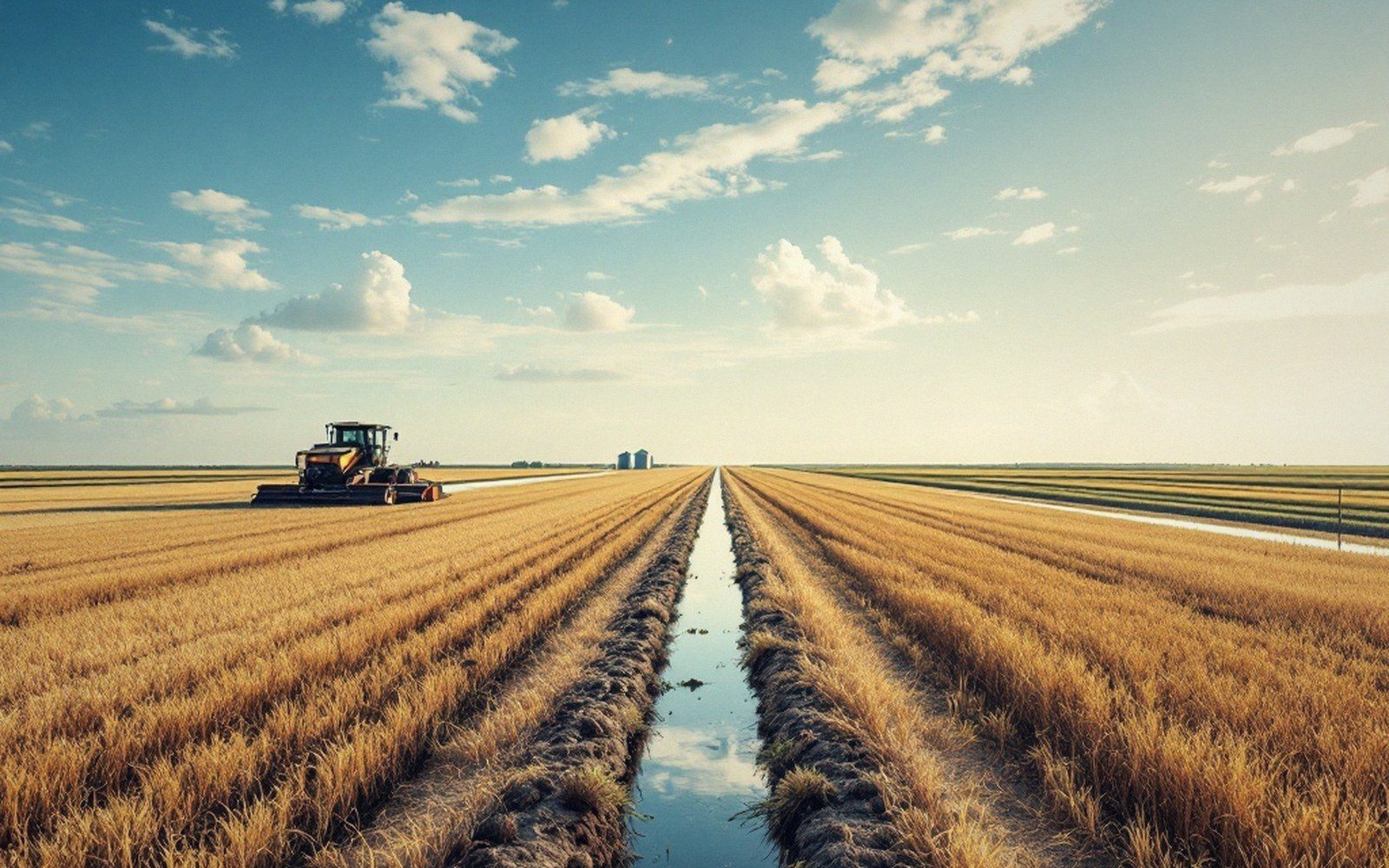
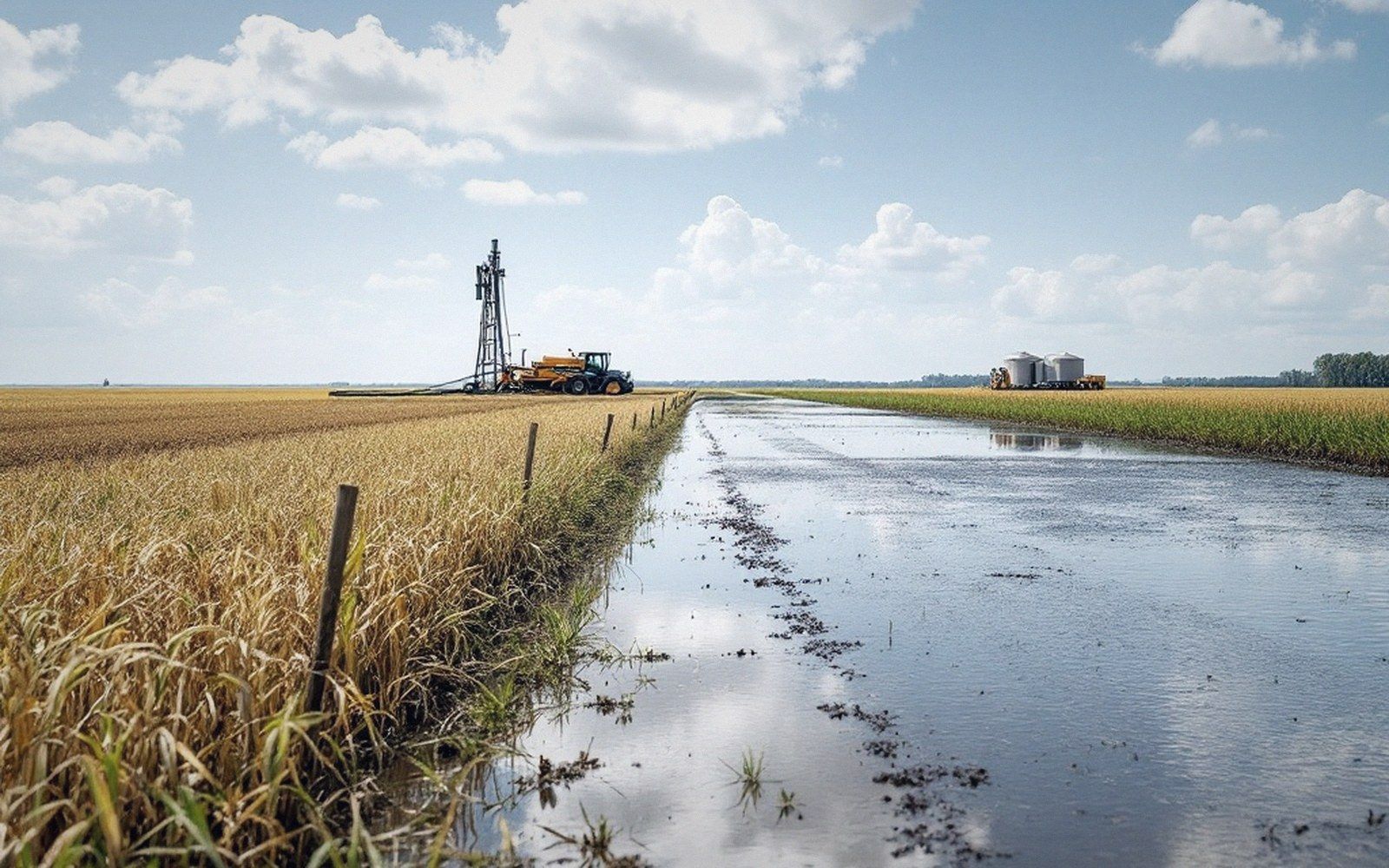
Flood irrigation is the system rice demands. You build a bay, you set the check, you fill it. Water stands at a few inches across the whole surface, and the soil — heavy Delta clay if you are in the right county — keeps it there without losing much to seepage once it has swelled shut. The flood does several jobs at once: it kills weeds, it buffers night temperatures during heading, and it feeds roots without any distribution infrastructure beyond the bay walls themselves. The efficiency number looks good because the water stays on the field. What it costs is in levelling: a rice bay must be cut to a tolerance measured in tenths of a foot, because even half a foot of variation in a flooded field means some spots are drowning while others are dry. That work is front-loaded. Once the ground is right, the system rewards you for years.
| Term | What it is |
|---|---|
| Water distribution | flood: uniform depth across the bay surface; furrow: declining contact time from head to tail |
| Primary efficiency loss | flood: seepage through levee walls and bay floor early in season; furrow: tail-end runoff before soil wets |
| Levelling requirement | flood: tight tolerance, tenths of a foot; furrow: consistent slope, less precision but no reverse grade |
| Labour pattern | flood: mostly at fill and drain events; furrow: continual set-changes during irrigation runs |
| Recovery option | flood: limited; furrow: tail-water pit and return pump close the loop |
Furrow irrigation is the older practice on the row-crop ground that does not flood — corn, cotton, soybeans on fields not built for a standing bay. Water is turned out at the top of the run from a gated pipe or siphon tube, one stream per furrow or every other furrow, and travels downhill toward the tail end. The problem is that the soil at the head of the run gets far more contact time than the soil at the tail. Match the flow rate and run length badly and the head end is over-watered before the tail end is adequately wet. Shortening runs improves uniformity but multiplies the number of sets a crew must change. On a still, dry Delta afternoon in July, changing sets every few hours across several hundred acres is a real labour cost.
Furrow irrigation is the older practice on the row-crop ground that does not flood — corn, cotton, soybeans on fields not built for a standing bay.
Water efficiency in furrow systems is lower than it looks on paper, because significant runoff leaves the tail end of the field — especially early in the run, when a large stream pushes water to the tail before the soil has wet, or later when the run is nearly complete and flow reaches the tail while the head is still absorbing. That runoff is not wasted if it is caught. Tail-water recovery pits and return pumps exist precisely to intercept what leaves the low end and send it back to the top, turning a linear system into a loop. Without recovery, a furrow-irrigated field can lose a large fraction of what was pumped to drainage.
The two systems also have different relationships with the land surface. Flood requires precise, uniform grade. Furrow requires a predictable, consistent slope — enough that water advances at a useful rate without eroding the furrow bottom, not so steep that it races to the end before the soil has drunk. Either extreme fails. Very flat ground slows advance so much that a furrow run becomes impractical. Very steep ground moves water too fast and leaves the soil along the run too little time to take up water before it reaches the tail end.
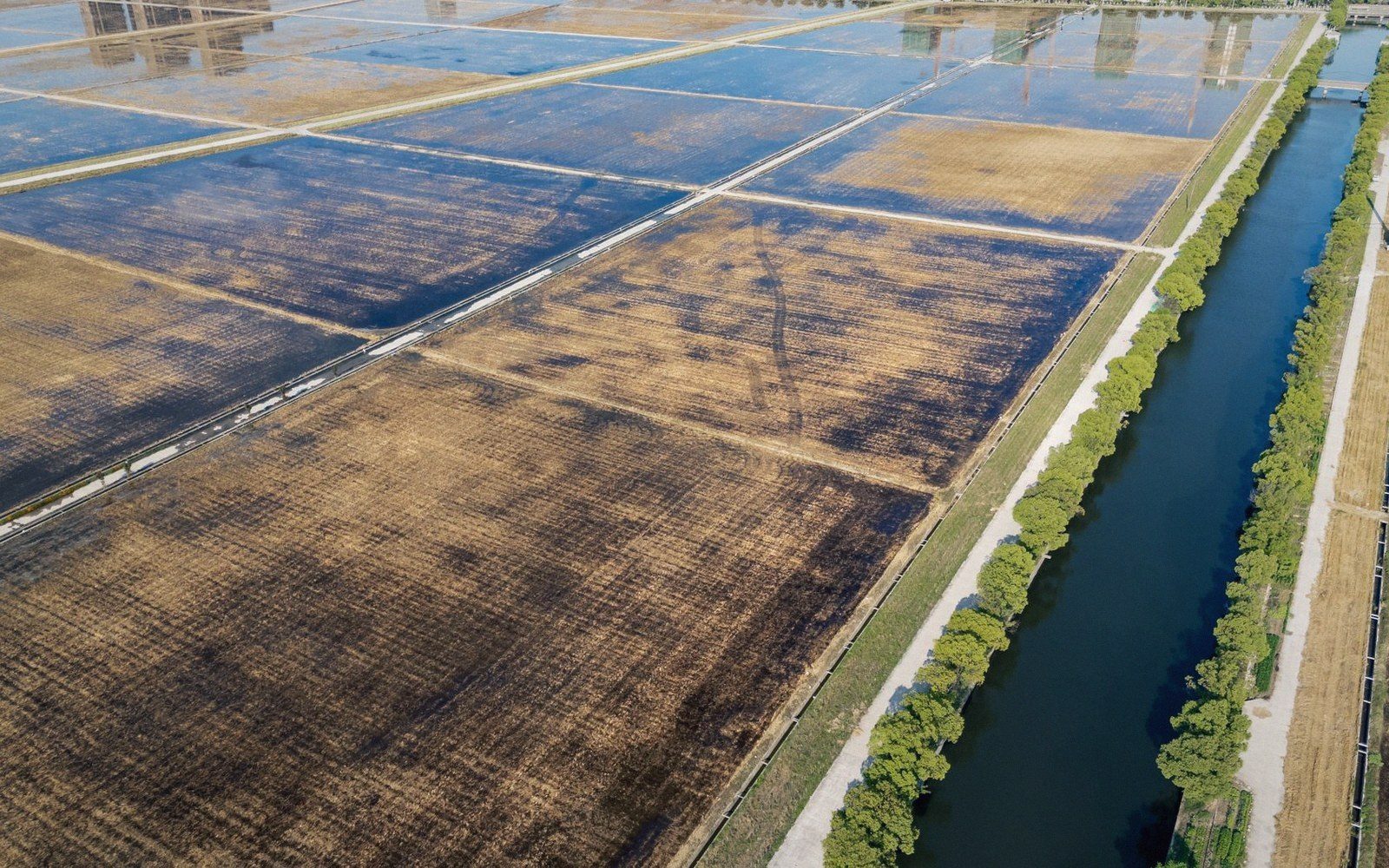
Where the two systems coexist on the same farm — and they do, because a Delta operation may run both rice and upland row crops — the infrastructure rarely crosses. The flood bays have their own wells, supply ditches, and check hardware. The furrow ground has gated pipe, siphon tubes, and, ideally, a tail-water pit at the bottom. Both draw on the same aquifer. Both show up on the same monthly pump-hour log, and both have to answer the same question at the end of the season: how many inches applied per bushel produced, and whether next year that number has to come down.