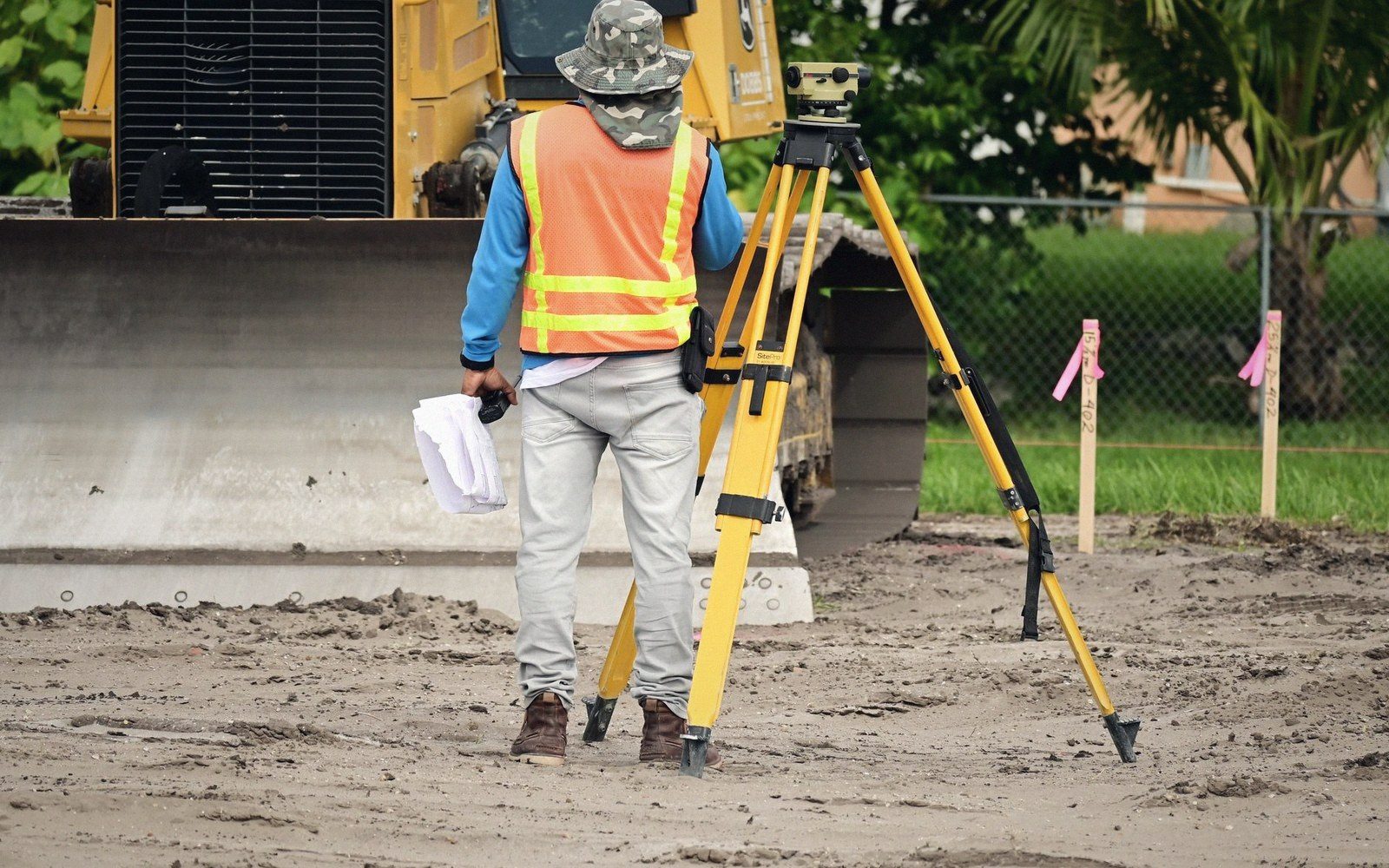
Survey grade is not flat. The target is a controlled slope — and the number that defines it is smaller than most people think.
The reference plane
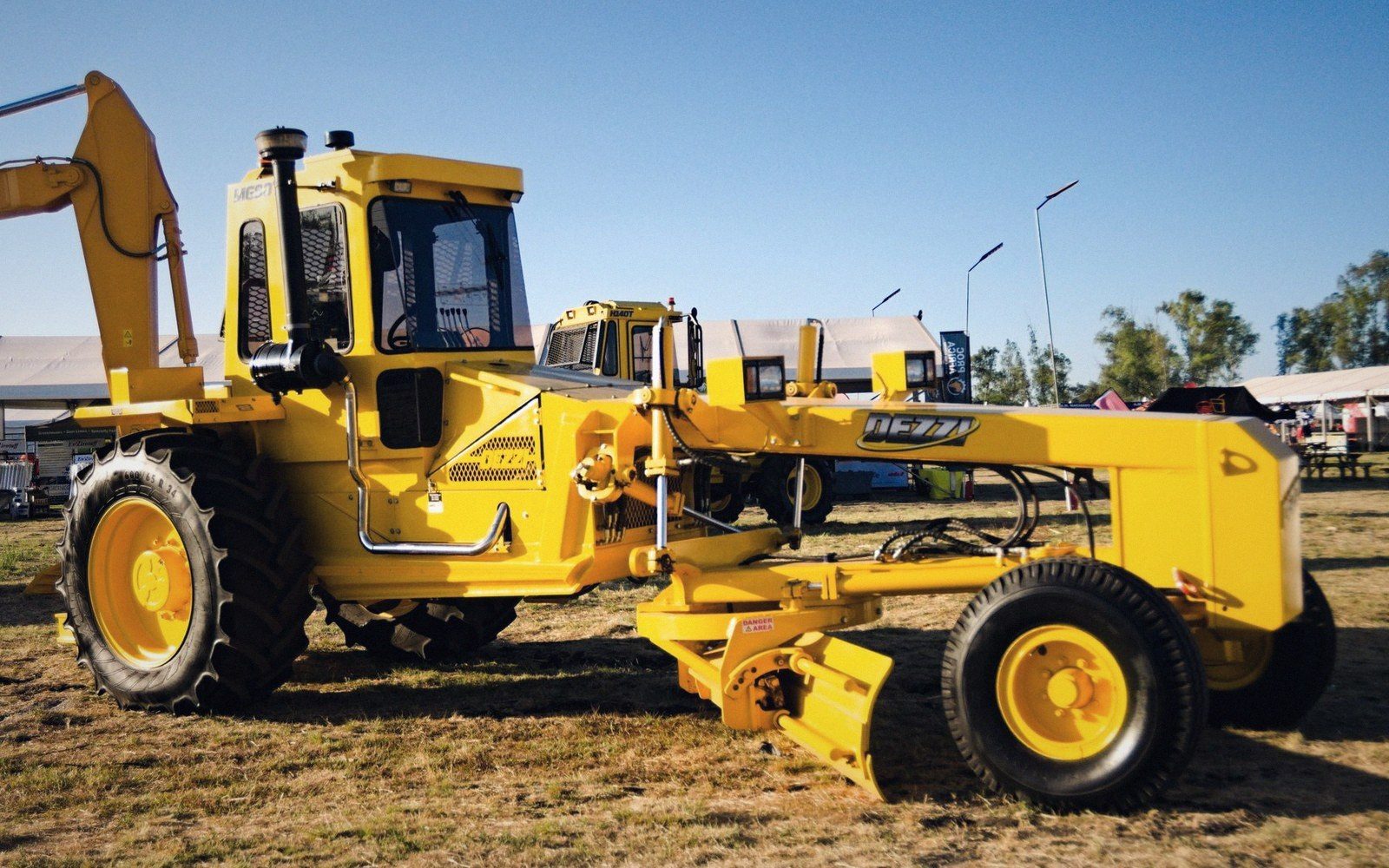
A laser level shoots a rotating beam across the field at a fixed elevation. The receiver on the scraper blade reads that beam constantly, and hydraulics move the blade up or down to chase the signal. The machine does not know what the ground is doing; it knows only where the blade is relative to the plane. The plane itself is set by the operator before the cut begins, and the choice of plane is everything.
For rice ground, the plane is not level. A perfectly flat bay will not drain — or will drain so slowly that timing a harvest becomes a guessing game. The practical target is a fall between zero and a tenth of a foot per hundred feet of run, and on most Delta ground it sits right at that upper edge: one-tenth. An inch and a fifth of vertical drop across a hundred feet of horizontal distance. That is the number. It is small enough that you cannot see it by eye, cannot feel it walking the field, and cannot establish it with any instrument less precise than a rotating laser or a surveyed GPS base.
Why not more slope? Because more slope means the low end of the bay is deep before the high end is covered, and rice wants a uniform flood depth across the whole surface. Uneven water means uneven temperature buffering at heading, uneven weed control, and uneven application of any water-applied inputs. The field fights itself. The tenth-of-a-foot figure is a compromise between drainability and uniformity, arrived at through decades of practice rather than a single engineering decision.
Close enough is a real standard here; perfect is not achievable in alluvial silt that compacts unevenly and settles after the first wet season.
What the survey is measuring
Before any dirt moves, a crew — or more commonly now, a GPS-equipped machine running its own pre-pass — maps the existing surface. Every point gets an elevation. The software then calculates the best-fit plane that moves the least total volume of soil while achieving the design slope, keeping the cut-and-fill balance as close to zero as possible across the field. That plane becomes the instruction set for the scraper.
The design slope has a direction. On a rectangular bay, it runs from the water-supply end to the drain end, usually from the top levee toward the tail-water ditch. Cross-slope — variation perpendicular to the main fall — is ideally zero, because any lateral tilt causes the flood to pool on one side. In practice, a finished field holds cross-slope to a few hundredths of a foot per hundred feet, which is tight enough that the flood covers the high spots without leaving the low spots deep. Close enough is a real standard here; perfect is not achievable in alluvial silt that compacts unevenly and settles after the first wet season.
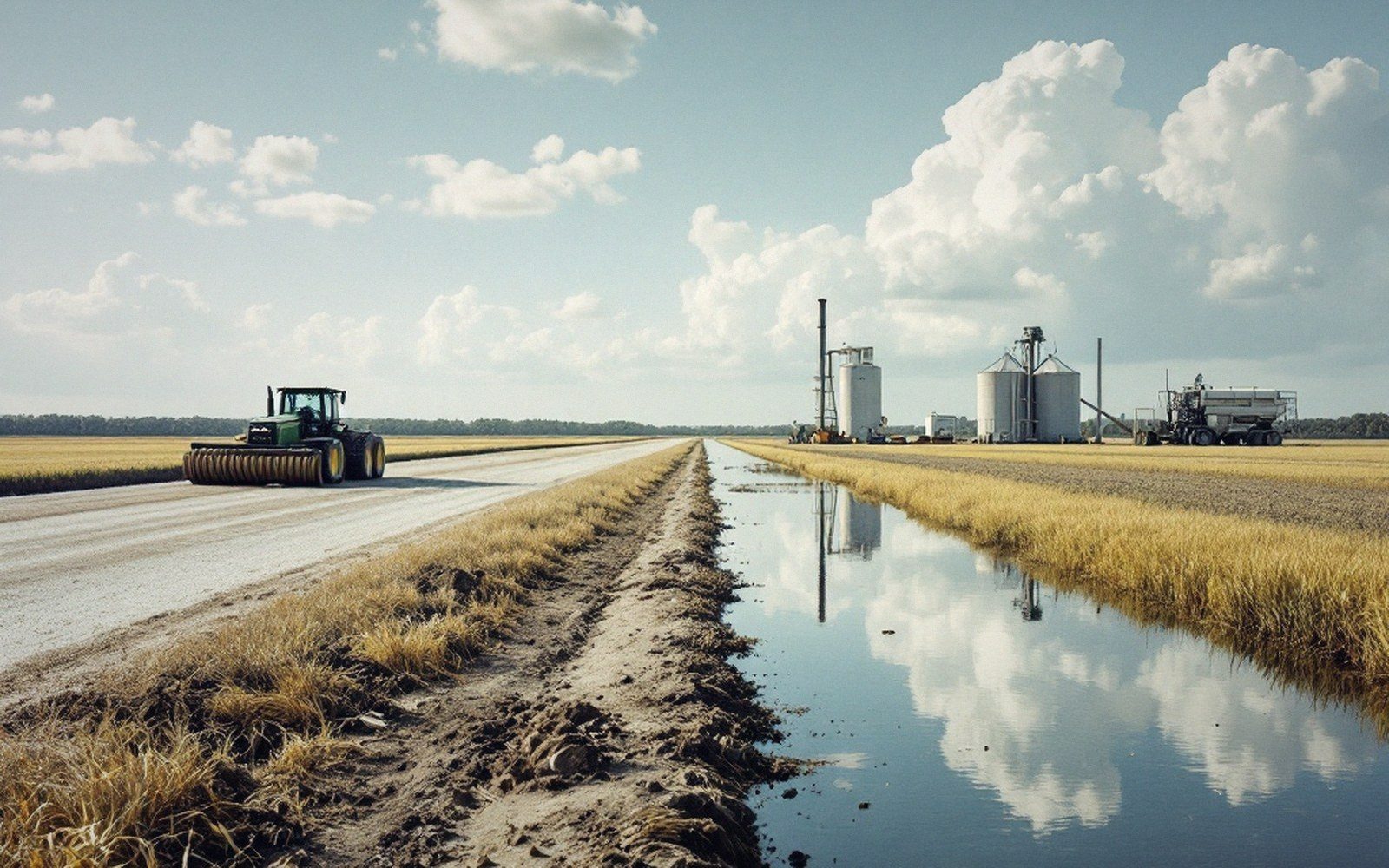
The precision of the laser-controlled grade is what makes the tenth-of-a-foot target achievable at field scale. Before rotating laser systems became common on the Delta in the 1970s and 1980s, land was graded by eye and by rod-and-level survey, and the tolerances were looser. You can see the evidence in older fields: subtle crowns, slight swales, corners that hold water two days after the rest of the bay has drained. Those fields were levelled; they were not precision-graded.
Why the number stays the same
Soil type varies across the Delta, rainfall varies by season, variety choices shift, equipment changes. The tenth of a foot does not move. It is constrained from both ends — too steep and the flood is non-uniform, too flat and the drain stalls — and those constraints are set largely by the behavior of water on the field. Water finds its own level faster than it finds a tenth-of-a-foot slope; that slight preference is what the engineer is using. The flood sits nearly flat on the surface while the underlying plane tilts just enough to send it toward the drain when the gate opens.
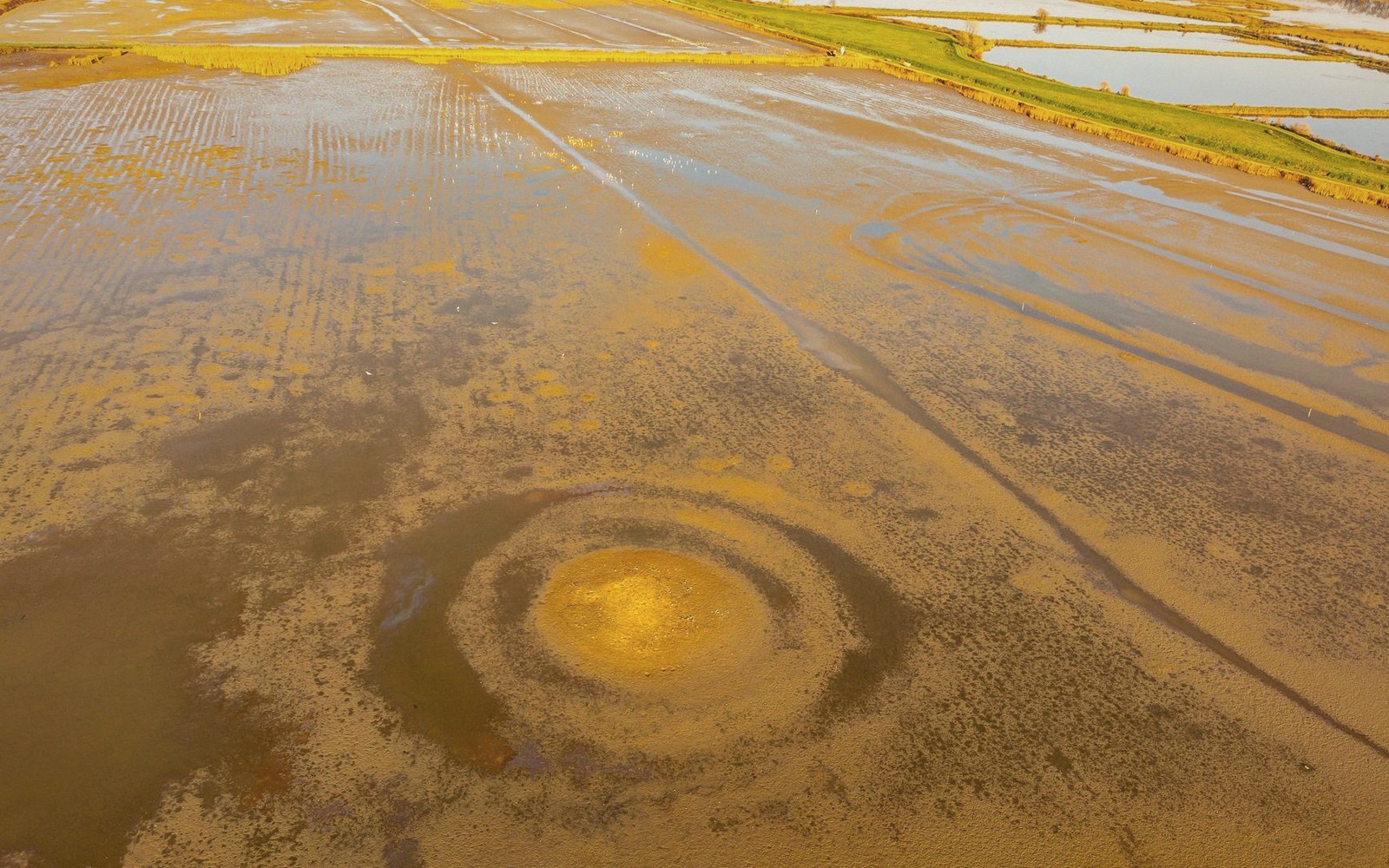
That is what survey grade is: not a description of how flat the ground is, but a description of how precisely the tilt has been controlled. The tenth of a foot is the tolerance, the target, and the reason the laser plane is set before the first blade-load of soil moves.