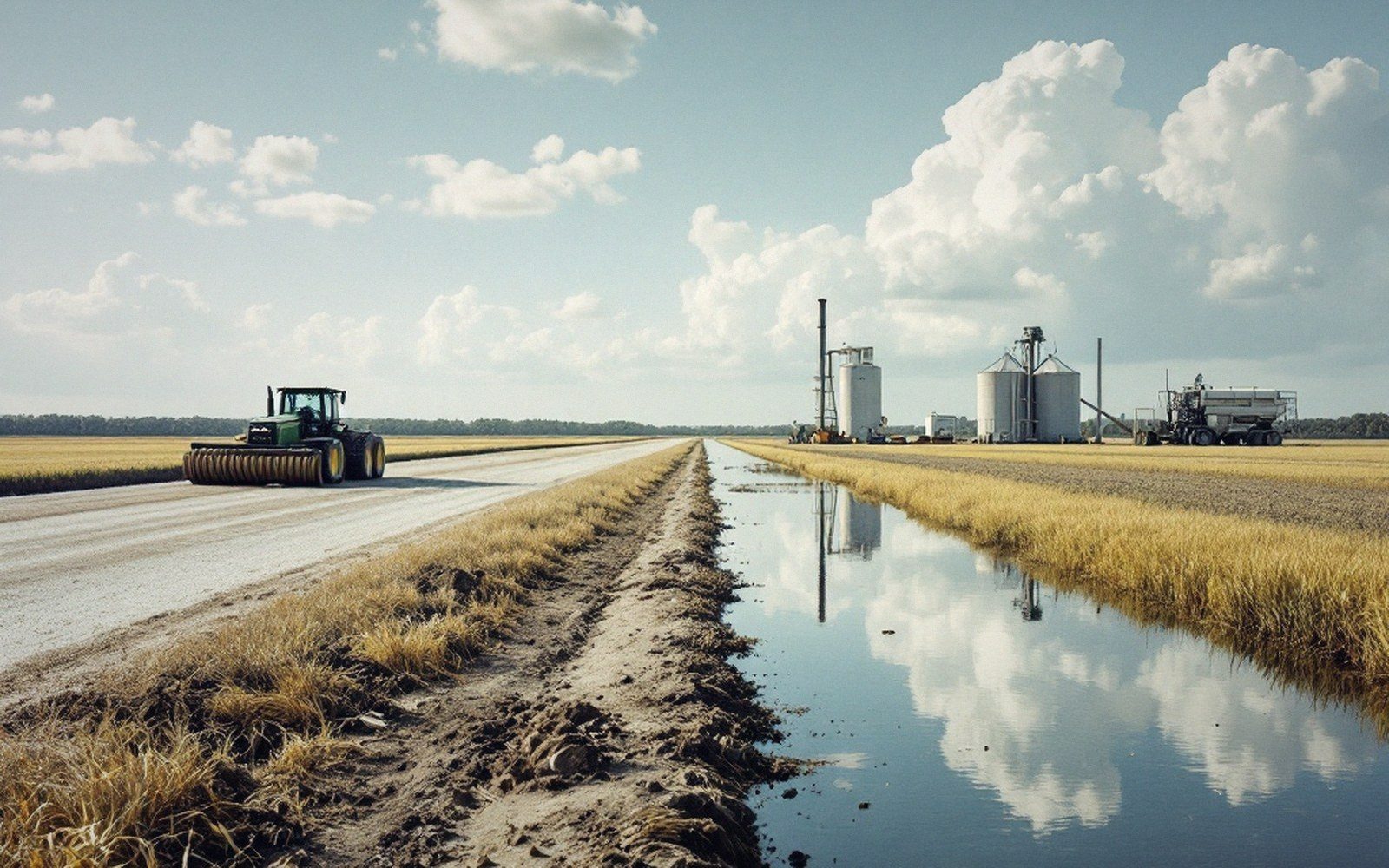
A pan that cuts and carries
The scraper is the tool that actually moves the dirt. On laser-levelling work across the Delta, a hydraulic pan scraper — typically a two-wheel, tractor-towed unit holding eight to fourteen cubic yards — is what translates a cut line on a survey into a changed field.
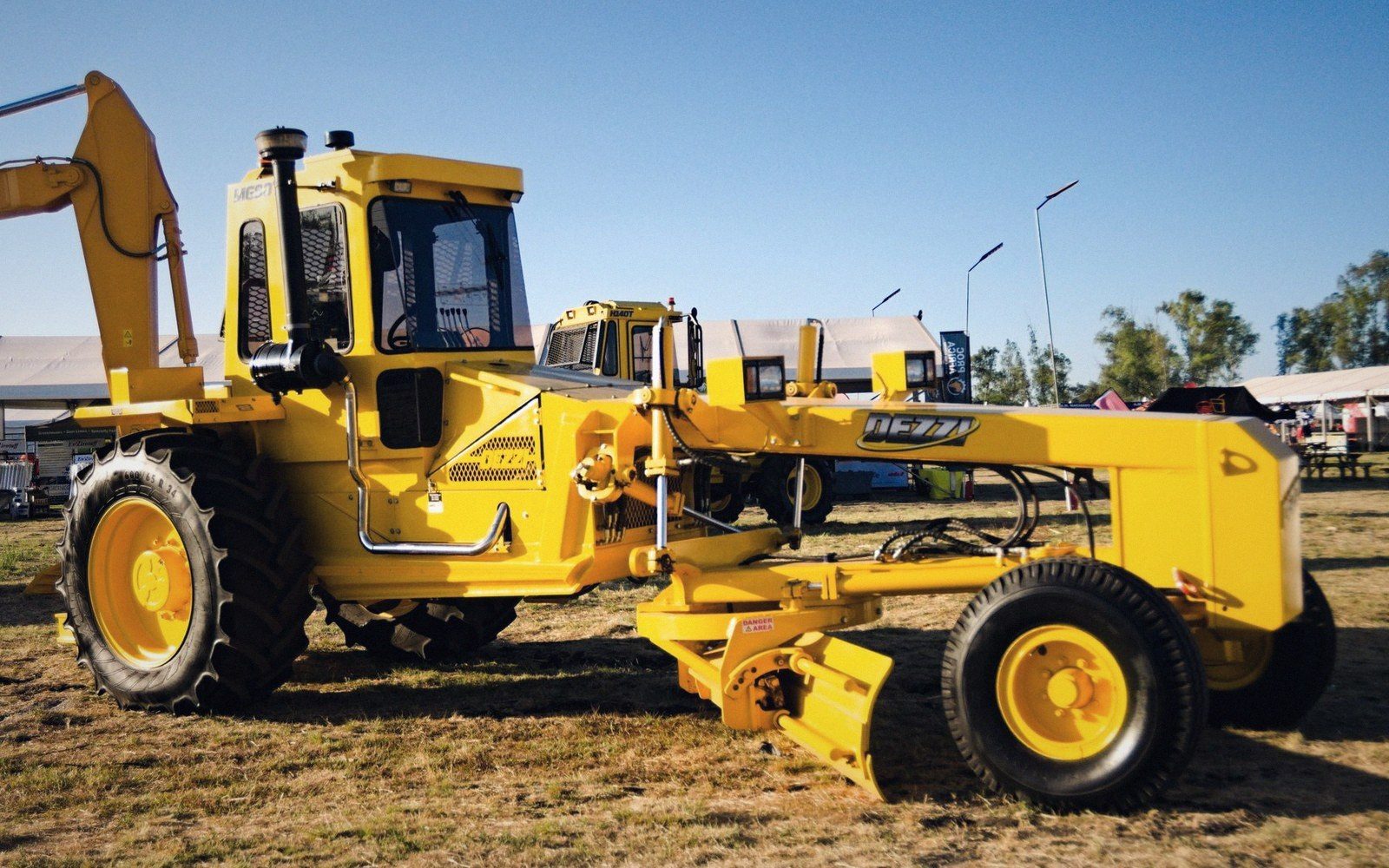
The geometry is simple. The pan's cutting edge bites into a high spot at a depth the operator sets, the bowl fills in a single pass of sixty to a hundred feet, the apron closes, and the tractor hauls the load downfield to a fill area. The bowl dumps, the edge drops again, and the cycle repeats. A competent operator working tight fill distances can move more than a thousand yards in a shift. The machine is almost entirely hydraulic: the apron, the ejector, the cutting-edge angle — all operator-controlled from the cab.
The reason these scrapers are towed rather than self-propelled comes down to the soil. Alluvial Delta ground is fine-grained, cohesive in wet conditions and loose when dry, and it offers poor traction to a heavily loaded machine under its own power. A large farm tractor — often tracked, or at minimum duals — delivers the drawbar pull without concentrating ground pressure the way a self-propelled scraper's drive wheels would. Traction belongs to the tractor; storage and release belong to the pan. Separating those functions keeps both working.
Push-loading, where a second tractor nudges the rear of the pan during the cut, is common on longer pulls or when the material is dense.
Push-loading, where a second tractor nudges the rear of the pan during the cut, is common on longer pulls or when the material is dense. The assist drops fill time and keeps the bowl loading cleanly rather than compressing ahead of the edge and riding over the cut.
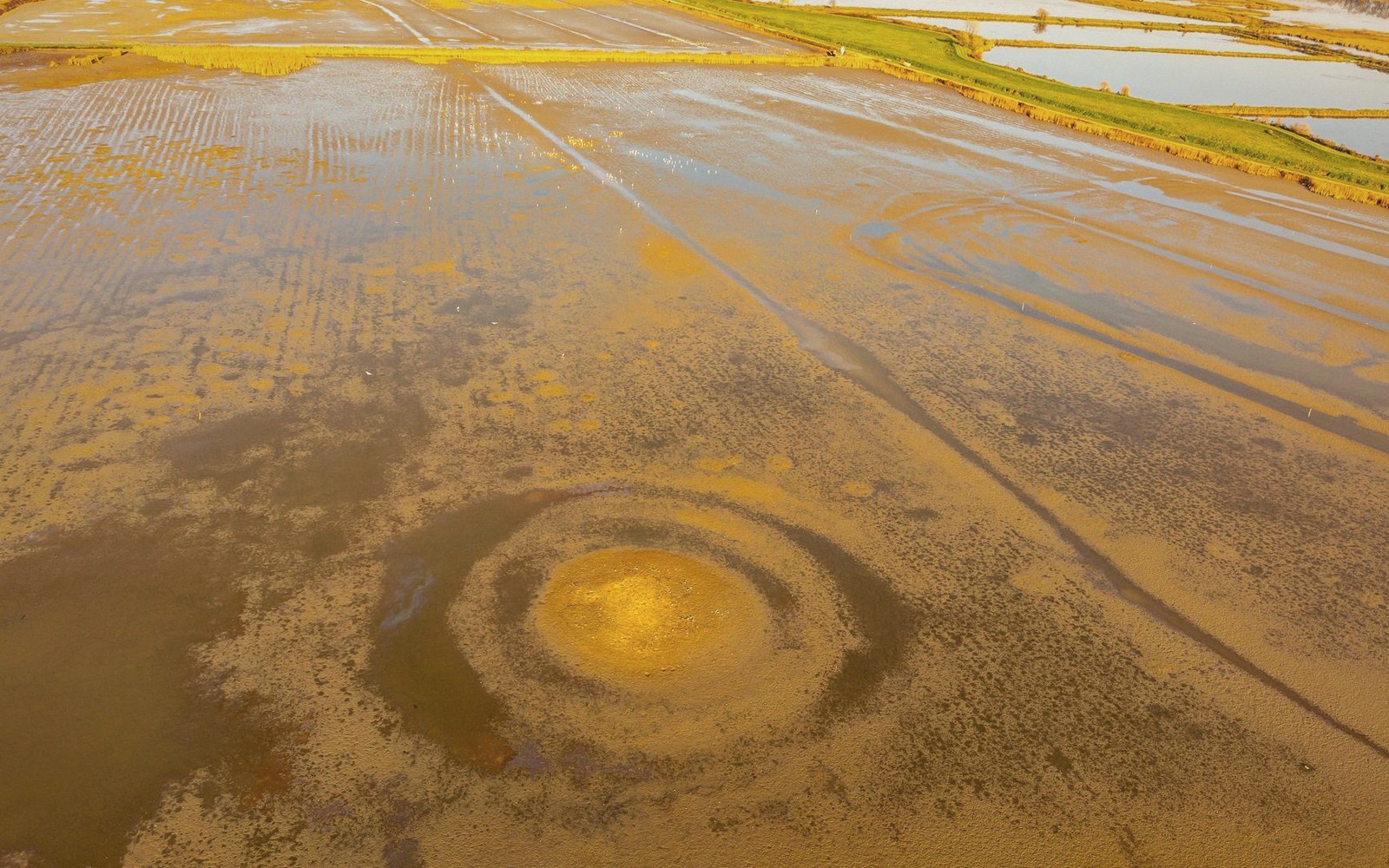
What the scraper cannot do is cut and fill precisely on its own. The laser system on the tractor blade sets the grade; the scraper follows the operator's judgment about where to load and where to dump. The survey does the arithmetic. The scraper does the hauling.