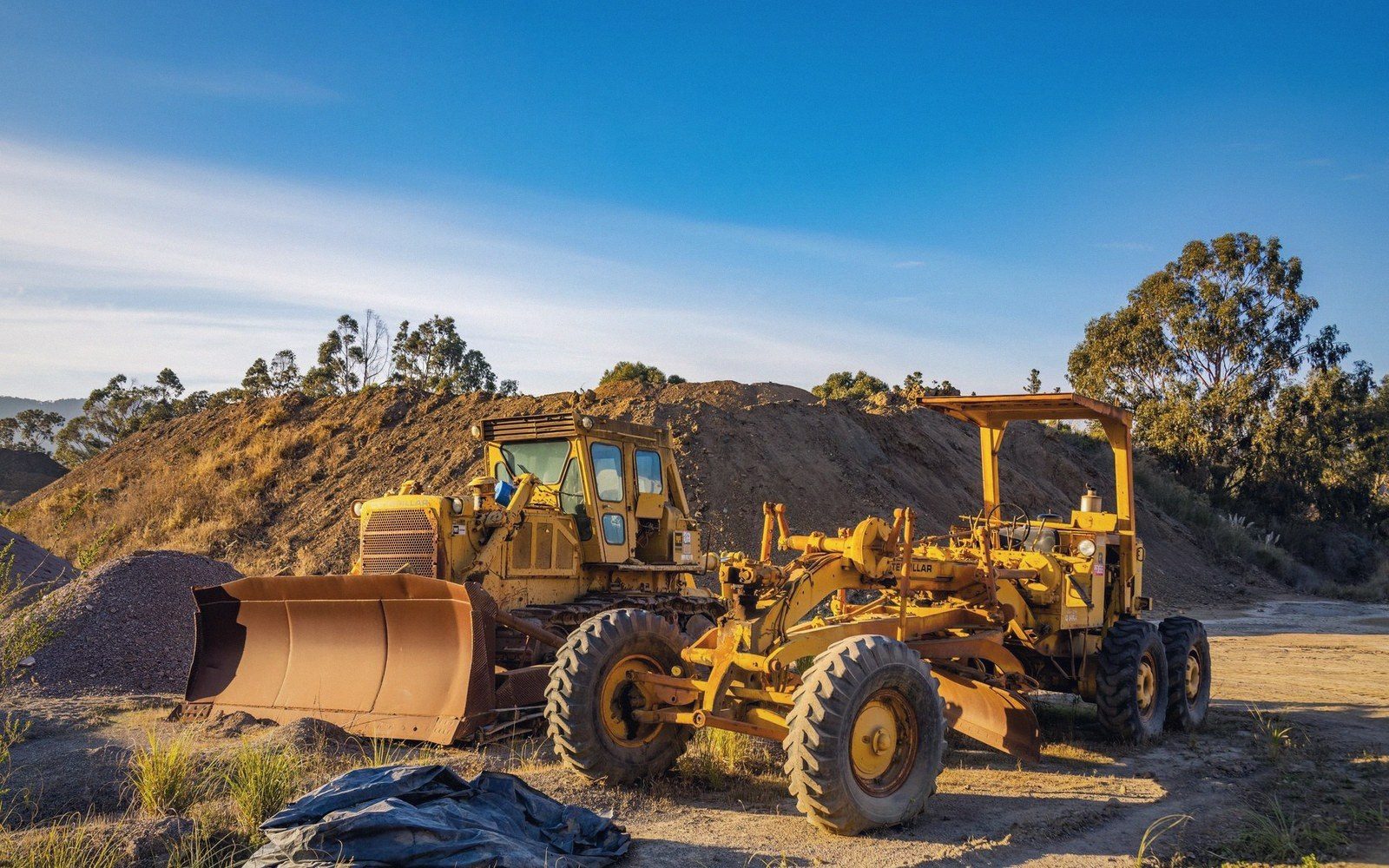
The whole field is the borrow pit
Laser levelling moves dirt from high spots to low ones, and the cardinal rule is that every yard of cut has to have a yard of fill waiting for it somewhere on the same field. Dirt hauled off-site is topsoil lost and money burned. Dirt hauled in is topsoil borrowed at the worst possible price. The job is to balance the earthwork inside the boundary — to make the field its own borrow pit.
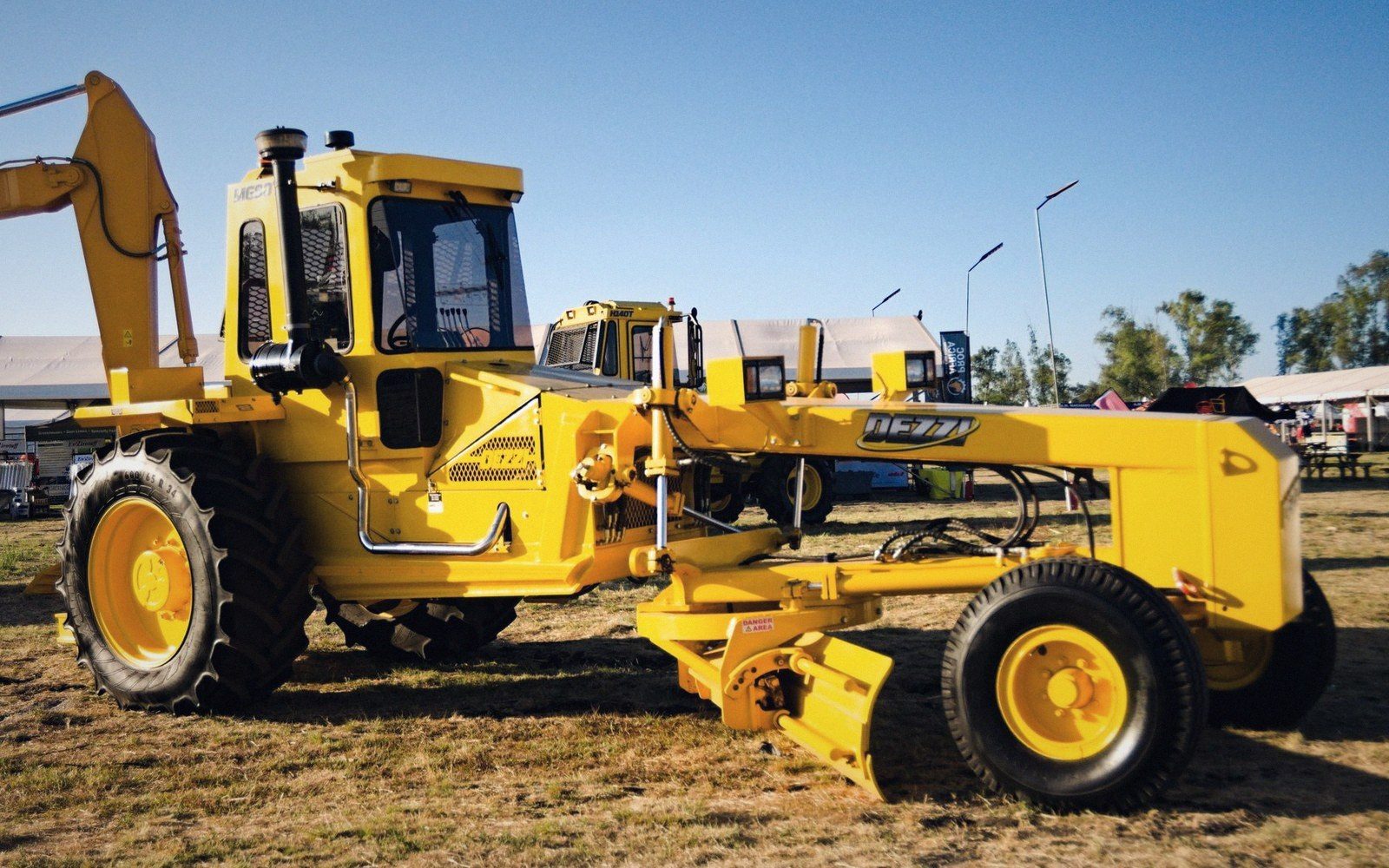
Before the scraper makes a single pass, a survey crew grids the field and the grade-design software calculates the plane that minimises total earth movement while still hitting the target slope: typically a tenth of a foot or less across the long run. That plane is the cut-fill solution. Ground above it gets cut; ground below it gets filled. The volumes are set against each other, and the best design is the one where they come closest to equal — the balance point where the scraper is always carrying a load in one direction and dropping it in the right place, not circling empty.
In practice the balance is never perfect. Soil swells slightly when it is disturbed — a phenomenon called bulking — so a field in balance on paper may show a small apparent surplus once the cutting starts. Good operators read this and adjust. A field in genuine cut-deficit, where there is more low ground than high, has to import fill, which usually means skimming a roadbed or a spoil bank nearby — material that arrives without the organic fraction the original topsoil carried.
A field where every high spot loses only three or four inches of topsoil behaves differently from one where a knoll loses eight.
The expensive mistake is designing the plane too aggressively: chasing a flatter field than the topography allows, so the design cuts deep into subsoil at one end to generate enough fill for the other. Subsoil exposed at the surface changes the soil's water-holding behaviour and takes at least one wet season to settle, often more before it yields normally. Some fields never quite recover the productivity of the ground that was cut away.
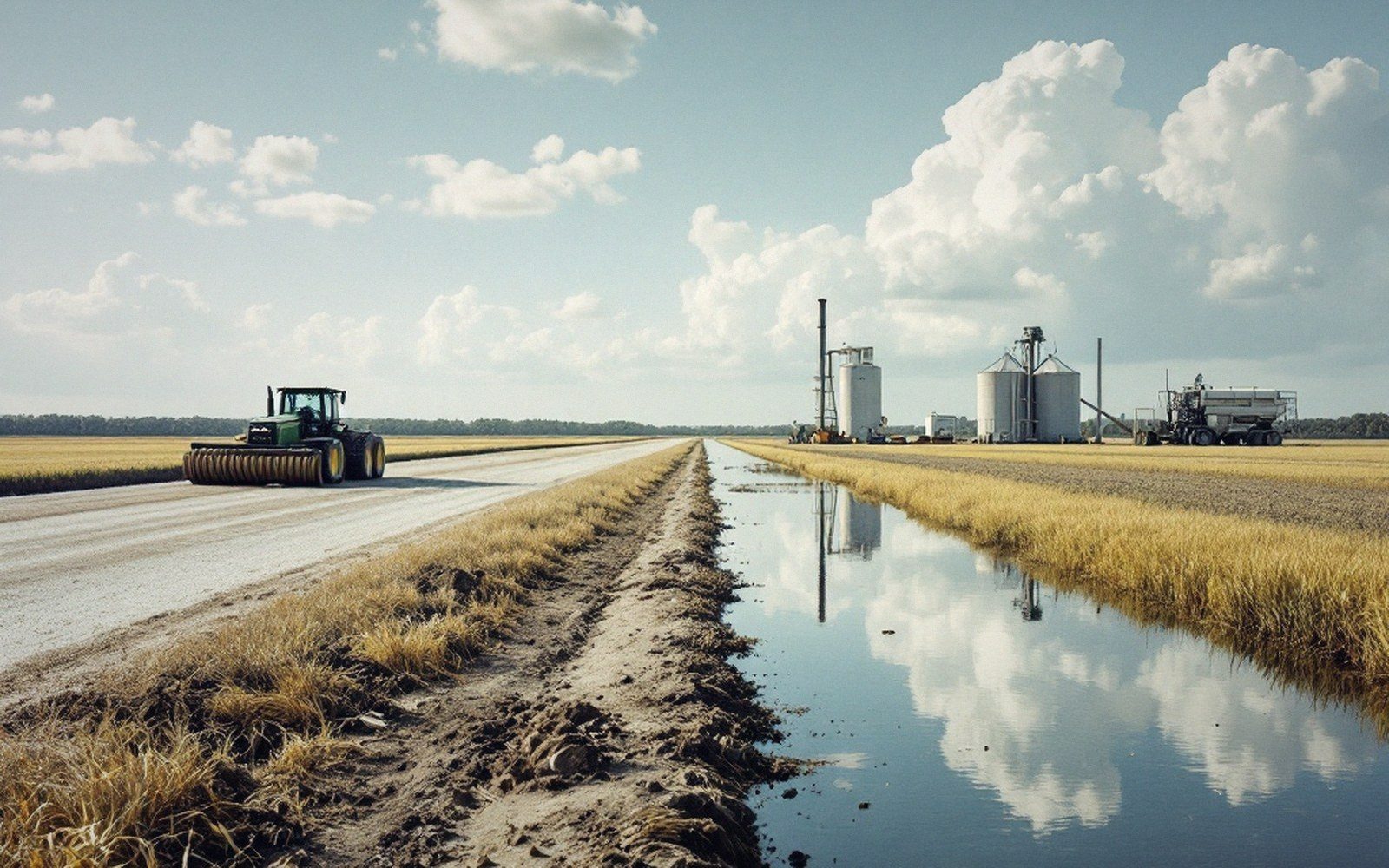
This is why cut depth matters as much as cut volume. A field where every high spot loses only three or four inches of topsoil behaves differently from one where a knoll loses eight. The same total volume moved can represent two very different agronomic outcomes depending on where the deepest cuts fall.
The art of the grade design is to find the plane that satisfies the hydraulics — water moves, water holds, a combine can travel — while keeping the deepest cuts shallow enough that the dirt underneath still grows something worth harvesting.