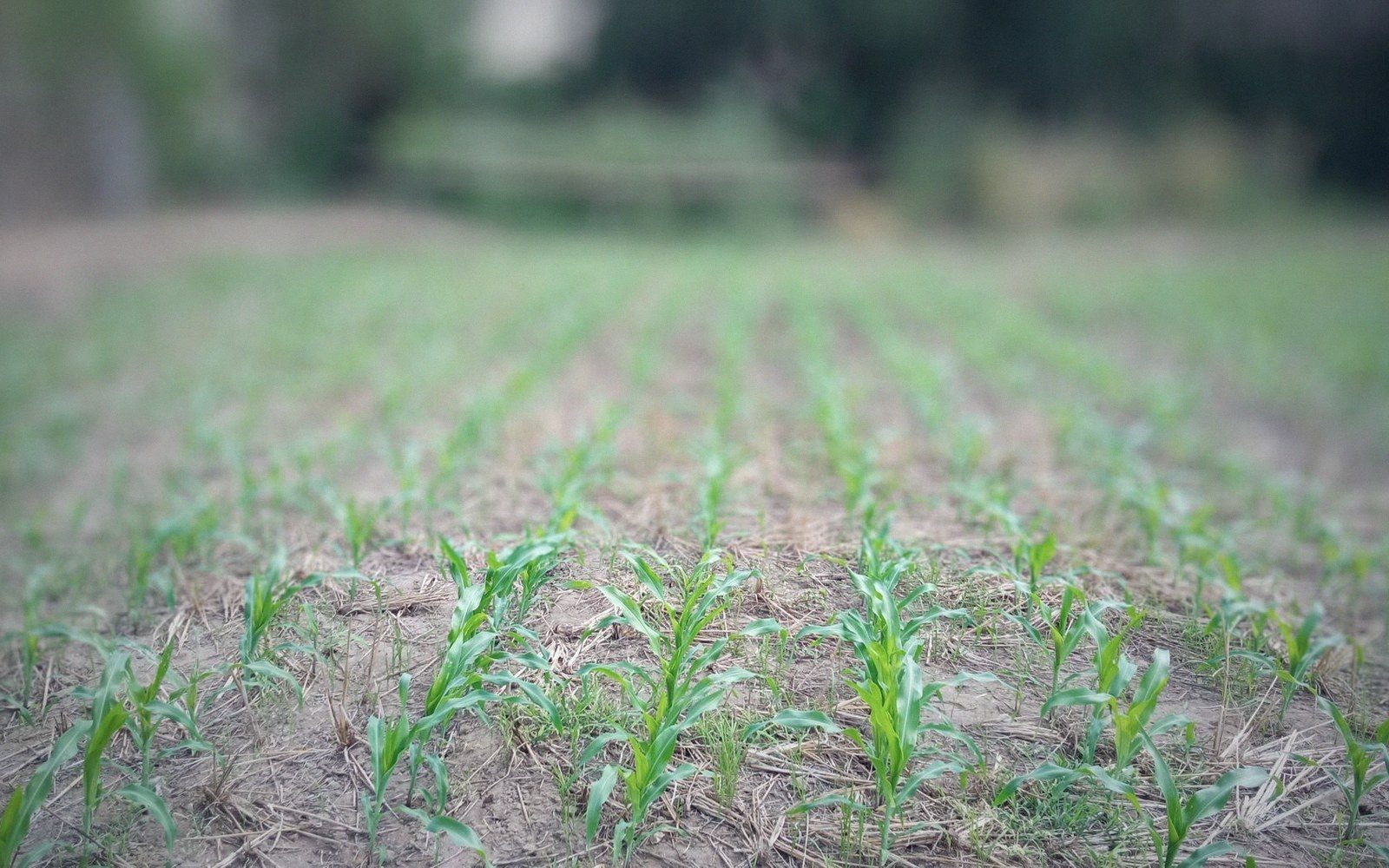
Fresh ground fights back
Cut-and-filled ground looks finished from a distance. Up close, it is a problem waiting to happen. The scraper has exposed subsoil on the high cuts and buried topsoil under the fill; the two zones behave differently from the first rain, and a rice seedling does not care which side of the line it landed on.
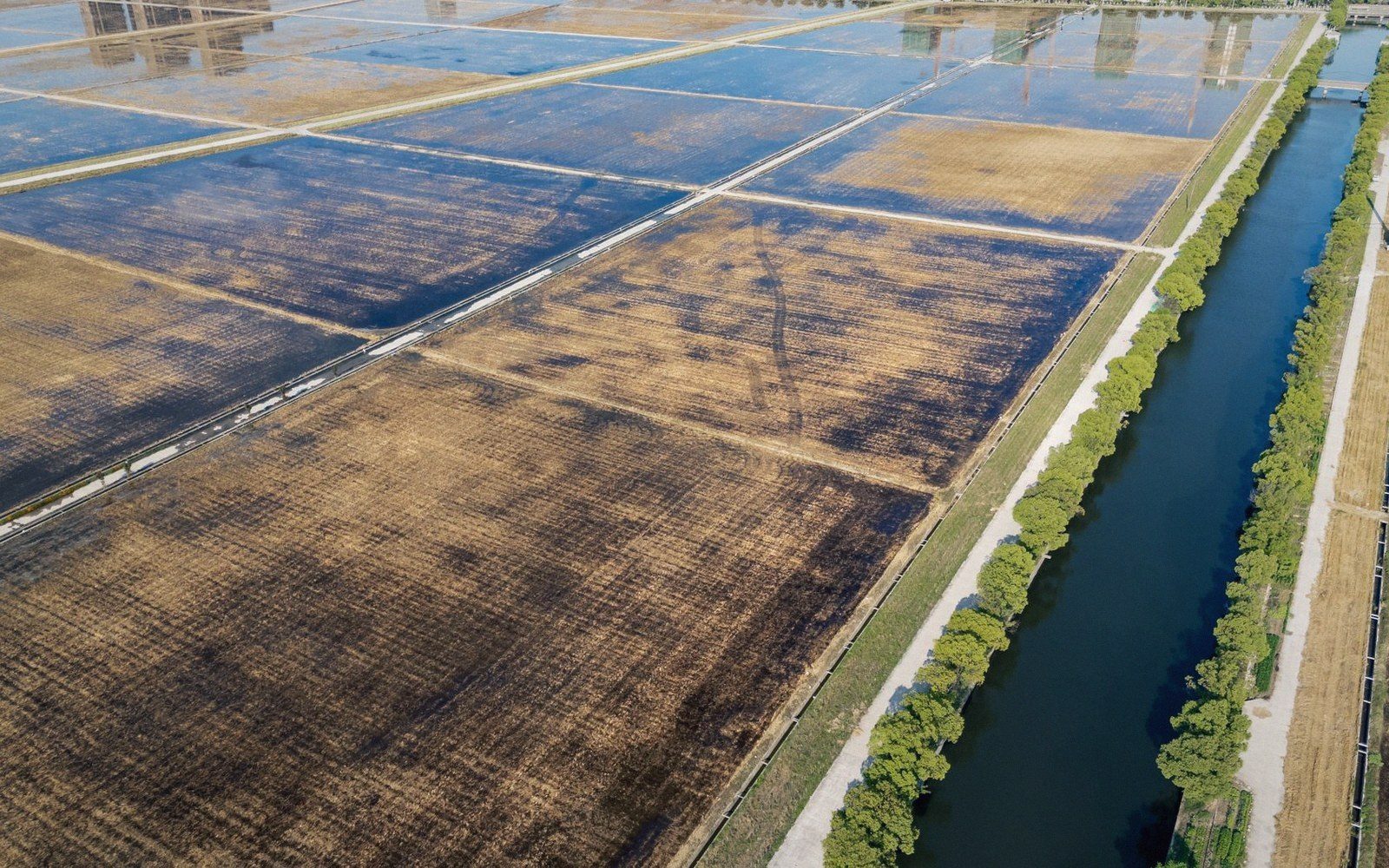
The central difficulty is uneven emergence. Seed germinates at a depth of roughly half an inch to an inch. On fill areas, the settled surface can slump after pre-flood irrigation, pushing that window deeper than the seedling can bridge. On cut areas, exposed clay seals under surface moisture and then bakes hard enough to resist the coleoptile entirely. The result is a patchy stand — thin here, missing there — that hands weeds exactly the gaps they need.
| Term | What it is |
|---|---|
| Cut exposes subsoil | low organic matter, poor germination environment |
| Fill settles unevenly under first irrigation | variable depth, patchy emergence |
| Clay crust forms on cut areas if surface dries before emergence | |
| Low spots collect water ahead of flood-up, drown pre-tiller seedlings | Low spots collect water ahead of flood-up, drown pre-tiller seedlings |
| Weed pressure fills every gap a thin stand leaves open | Weed pressure fills every gap a thin stand leaves open |
Seedbed preparation matters more on freshly levelled ground than on settled fields. A firm, uniform surface — achieved with a cultipacker or a ring roller after tillage — reduces the air pockets that let fill settle unevenly under the first flush of water. The firmer the contact between seed and soil, the more consistent the germination depth across the entire bay.
Many growers on fresh ground run a very shallow flush — enough to wet the surface without ponding — then pull it off before the permanent flood goes on.
Water management in the first days is critical. Too much too soon on fill areas pushes fine particles into a crust; too little on cut areas lets the clay surface crack. Many growers on fresh ground run a very shallow flush — enough to wet the surface without ponding — then pull it off before the permanent flood goes on. That brief wet-dry cycle firms the seedbed and gives emerged seedlings a chance to anchor before the bay fills.
Settling — the slow subsidence that continues through the first wet season — compounds everything. A bay that surveyed true at planting may show low spots by the time the flood goes on, and water will pool there ahead of schedule, drowning seedlings before they tiller. The answer is patience: fresh cut ground is not finished ground, and the best stand on a new bay usually comes in year two.