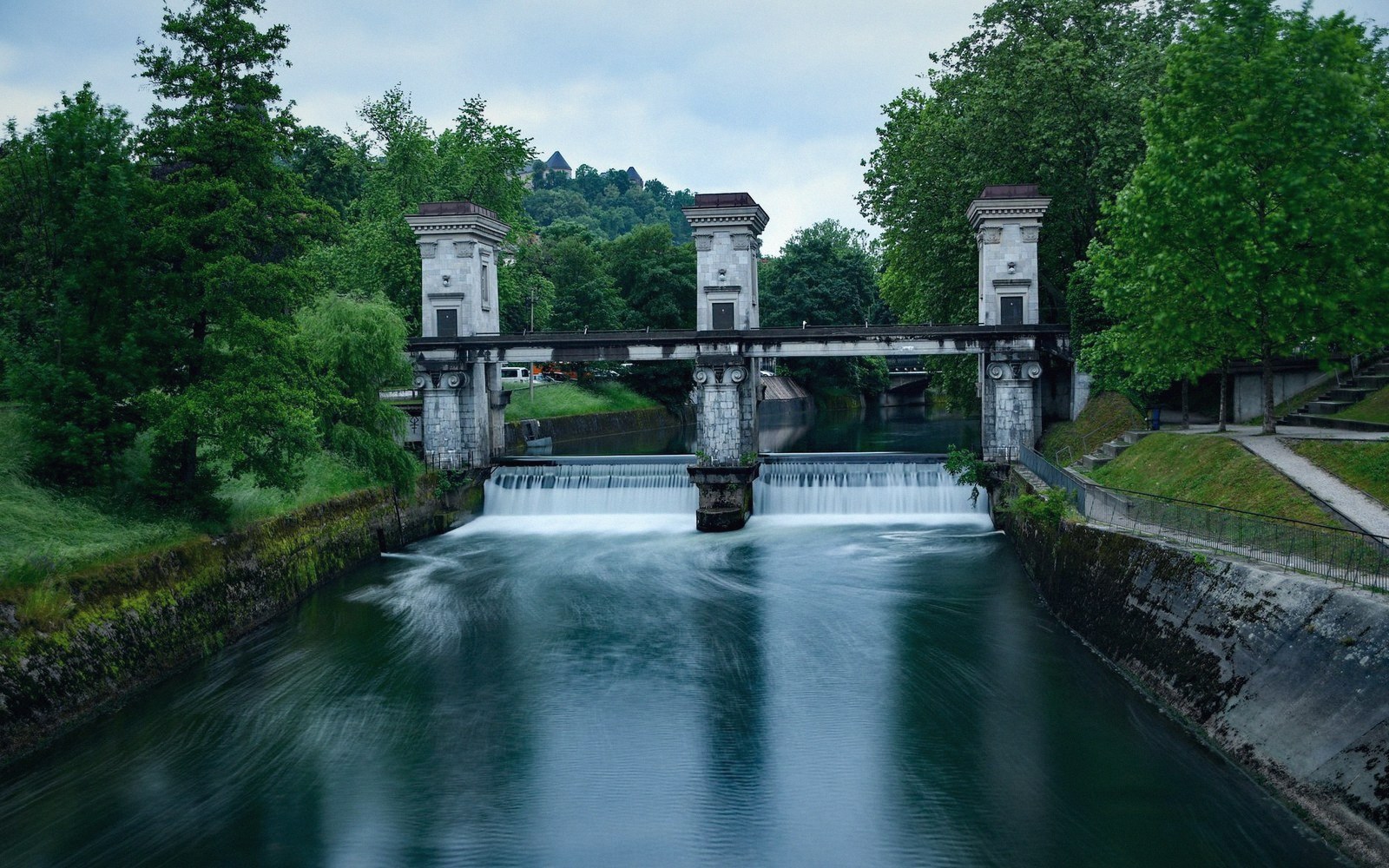
The hardware that opens and closes a bay
Every rice bay needs two things a levee by itself cannot provide: a way in and a way out. The levee holds the water; the gate decides when it moves.
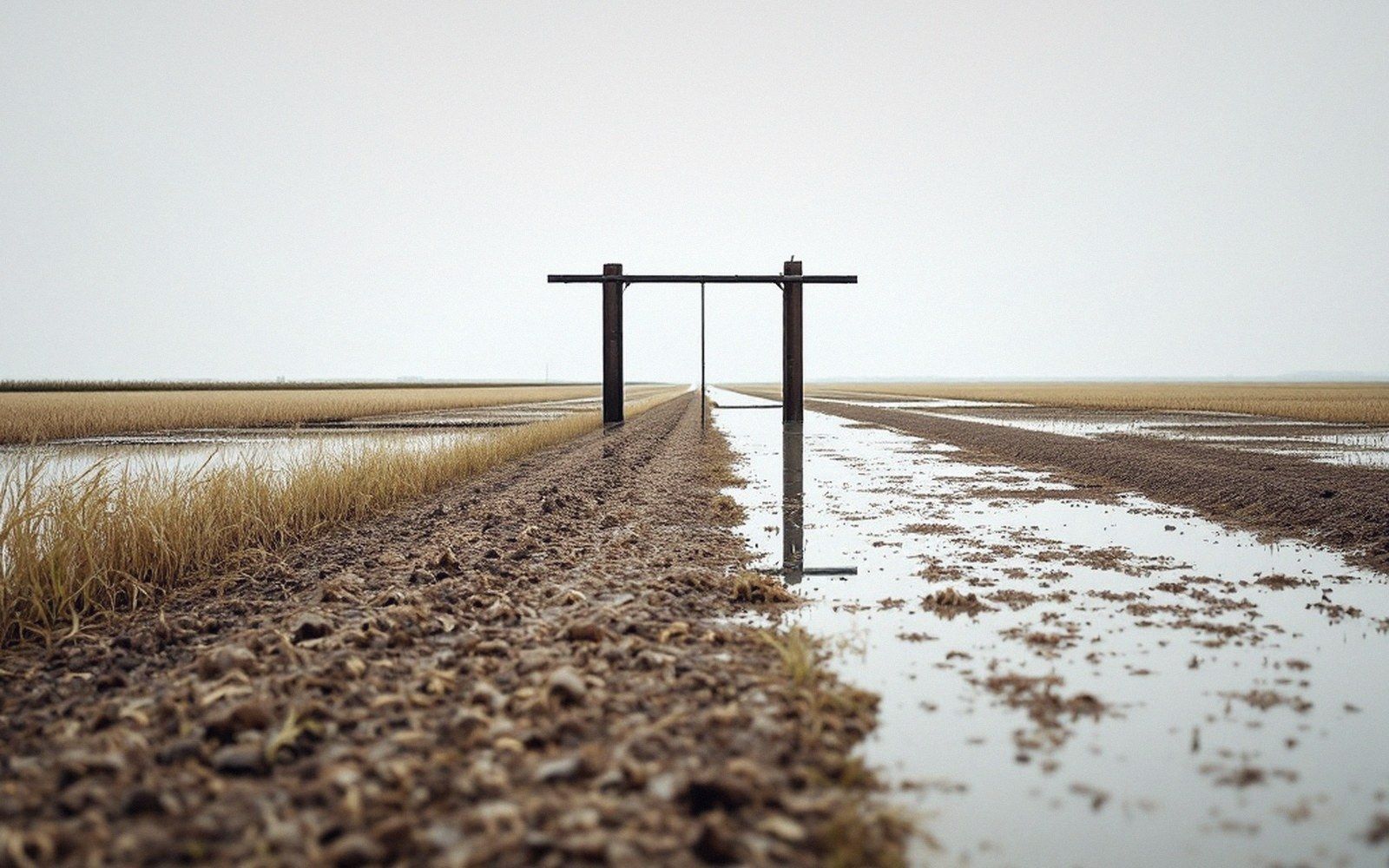
The simplest device on the Delta is the sleeve riser — a short length of pipe set vertically through the levee, with a sleeve or stacked rings that the grower slides up to drain and down to fill. Nothing moves under power; the farmer moves it by hand. At flush, the water surface finds the top of the riser and flows over into the drain furrow on the other side. The rings — usually aluminium or PVC in sections a few inches tall — let the operator drop the level in small steps, which matters when draining to harvest has to pace itself against a softening soil.
A flashboard riser works on the same principle but uses flat boards — often timber or composite — stacked horizontally in a slotted standpipe. Pull one board and the level drops by that increment. The appeal is precision: a grower managing a tight flood can add or remove a single board and see the result across the whole bay by the next morning.
The appeal is precision: a grower managing a tight flood can add or remove a single board and see the result across the whole bay by the next morning.
At the inflow end, the structure is simpler still: a pipe through the levee with a gate valve or a simple slide gate on the field side. Open it, water enters from the ditch; close it, the bay holds. The slide gate is preferred over a threaded valve because sediment and field traffic make a threaded valve hard to operate after the first season. Easy operation is not a luxury — a gate that sticks gets forced, and a forced gate leaks.
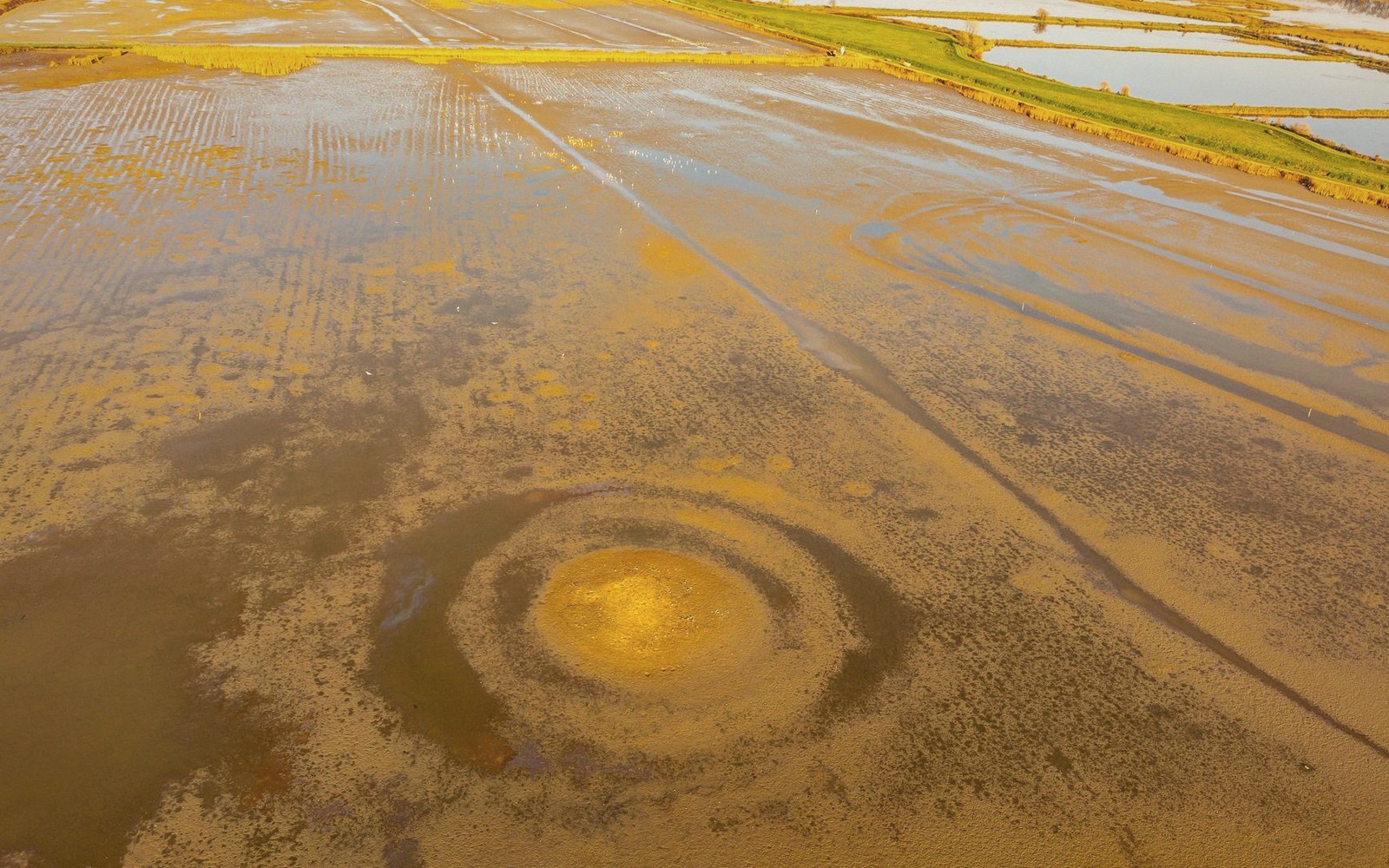
Leaks are the chronic problem with all of these structures. A sleeve riser or flashboard standpipe sits in an earthen levee that shrinks, settles, and gets driven over. The seal between pipe and soil degrades. Water finds the path and moves along the outside of the barrel — pipe seepage, in drainage vocabulary — undermining the levee from the inside. Concrete headwalls and proper compaction around the barrel at installation slow this, but they do not stop it permanently. The structures are inspected each winter when the bays are dry, and a weeping joint gets dug out and repacked before the next flood.
| Term | What it is |
|---|---|
| Pipe seepage | water migrating along the outside of a buried barrel, not through it; progressive, undermines levees quietly |
| Cause | shrinkage and settlement in the surrounding levee; compaction at installation is the primary control |
| Inspection window | winter, when bays are dry; catch it before the next flood season |
Spillways serve a different function: relief rather than control. A fixed-crest spillway set into a levee at a specific elevation lets water escape automatically if the bay floods above design depth, protecting the levee from overtopping during a heavy rain event. It does not replace the riser; it backs it up.