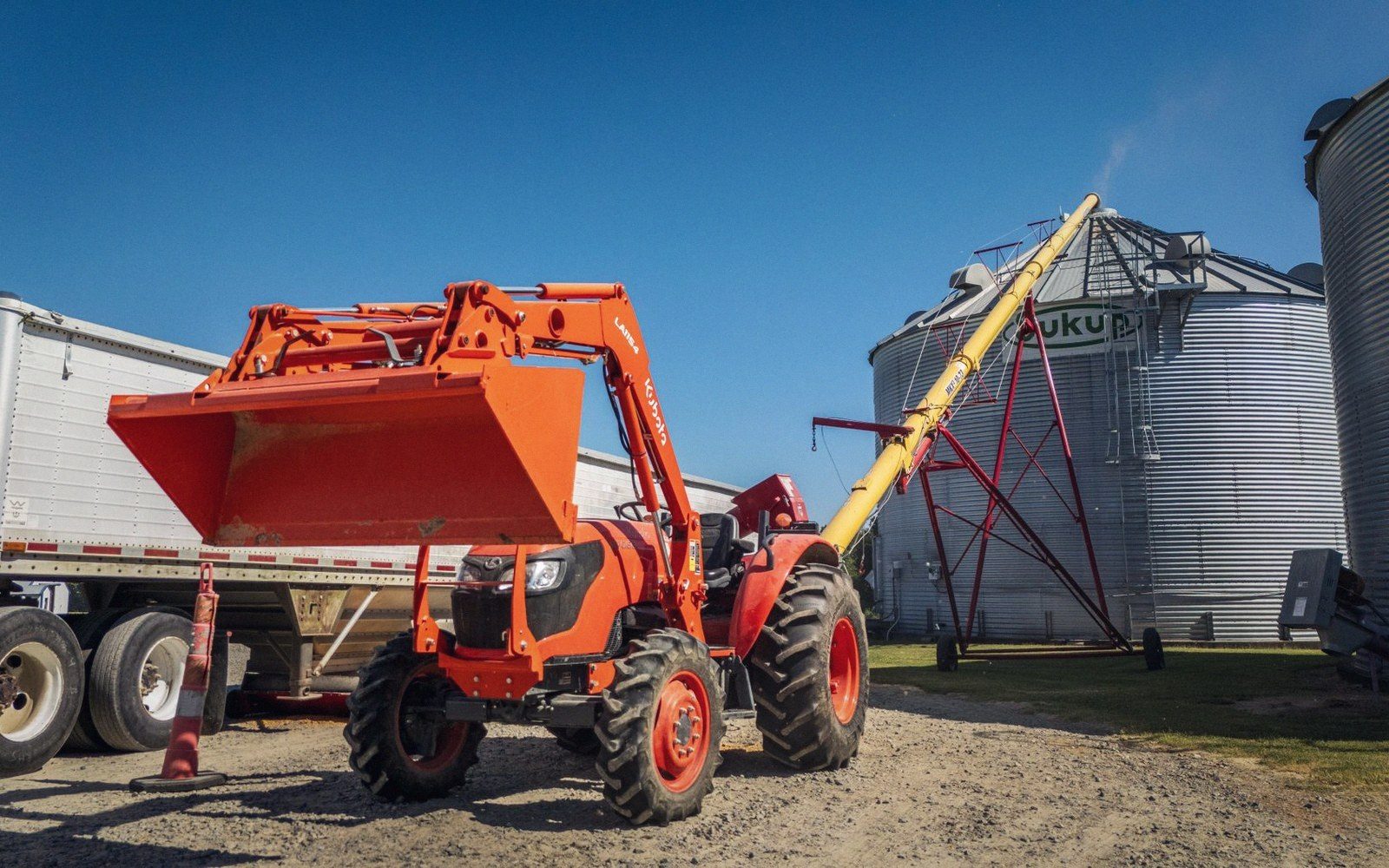
A dryer, a store, and a hazard — and the fan is running all three
A grain bin looks like a storage tank. Bolt-together corrugated steel, a cone roof, a floor raised above a concrete pad — it sits at the edge of a farmstead and does nothing visible. But every hour the fan is running, the bin is working. Call it storage and you will mismanage it. It is a conditioned environment that happens to hold grain.
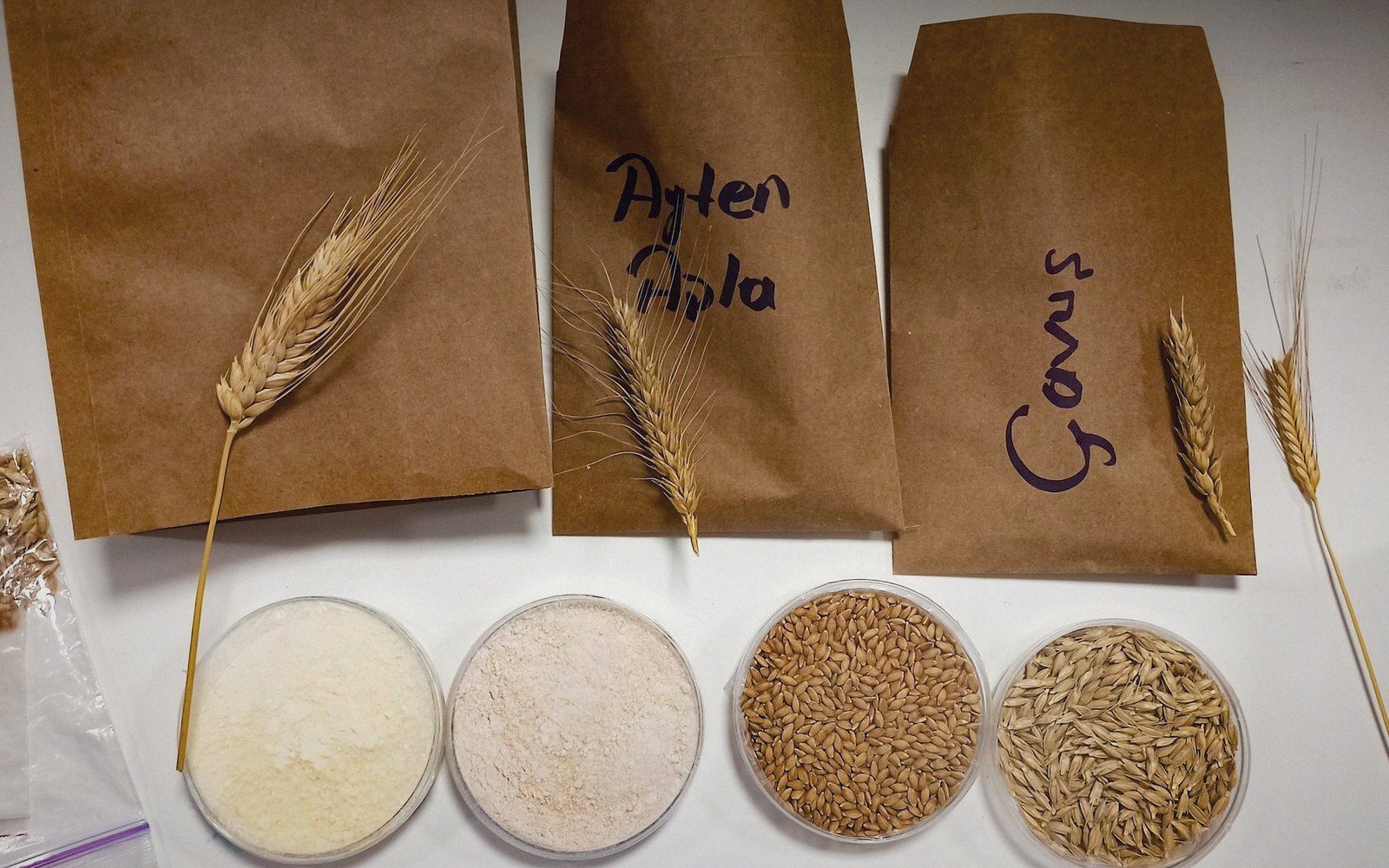
Rice comes off the combine at moisture contents that vary with variety, weather and timing. Fourteen percent is a rough threshold: below it, the grain is stable for months; above it, mold loads increase quickly and the grain begins to respire — burning its own starch and generating more heat and moisture as it does. The practical window between harvest and moisture and shrink trouble is narrow, and the bin is where that window is either held open or lost.
What the fan is doing
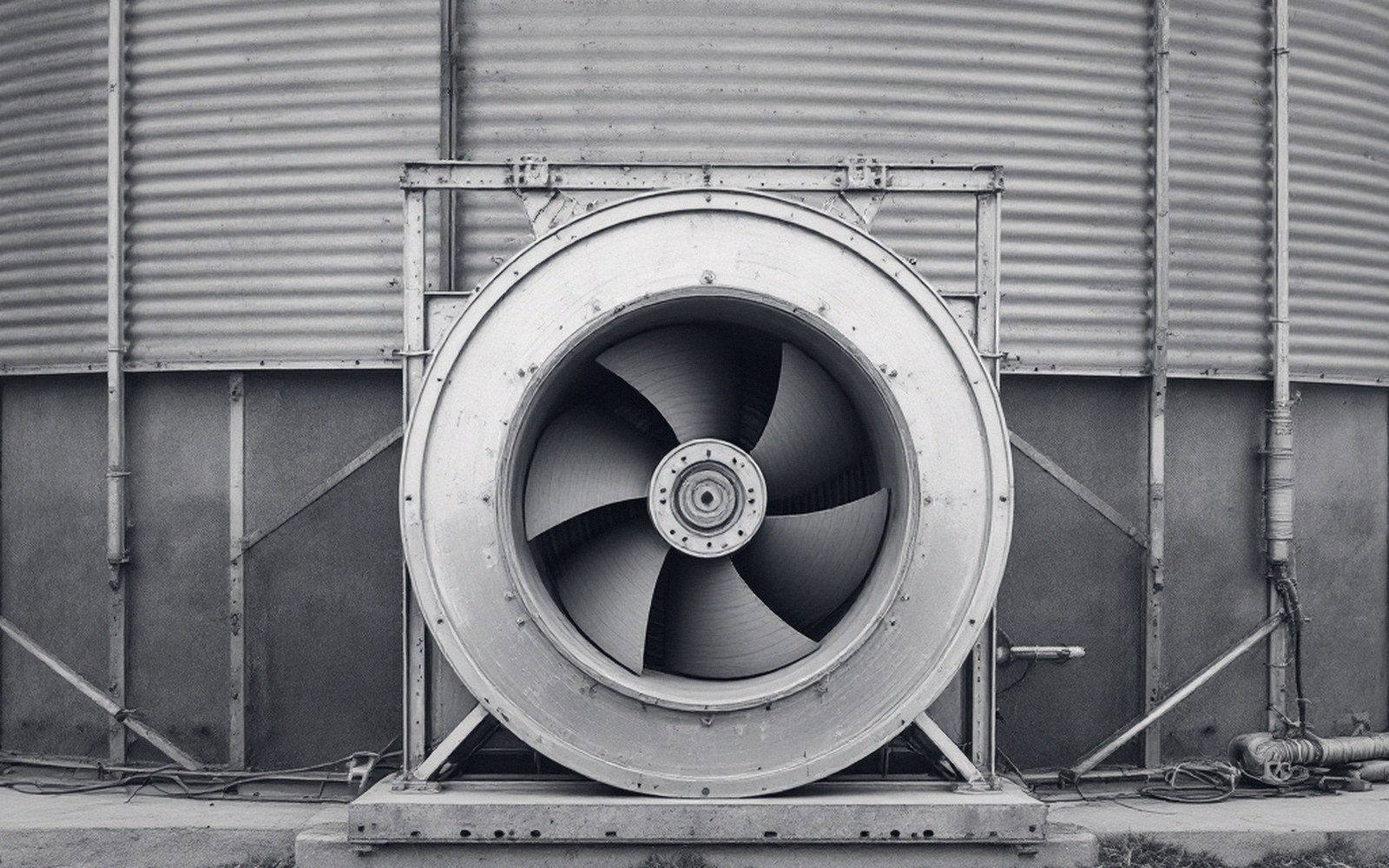
The fan's job is to move a column of air through a column of grain. Air enters through perforated ducts in the floor, rises through the mass, picks up moisture and heat, and exits at the roof. The rate at which that column moves — measured in cubic feet per minute per bushel — determines whether the system is drying, cooling, or simply equilibrating the grain to ambient conditions. Get the ratio wrong and the fan runs up the power bill while accomplishing very little.
The mechanism is almost always engulfment — a worker enters a bin to break up a crust or free a bridged mass, and the grain flows like a liquid.
A drying front is the useful concept. When you start the fan, a layer of grain near the ducts dries first. That front — the transition between dry grain below and wet grain above — migrates upward through the bin at a rate governed by airflow and the moisture difference between incoming air and grain. In a shallow bin with adequate airflow, the front moves fast enough to exit the top before conditions change. In a deep bin with marginal airflow, it can stall. Stalled fronts are where grain spoils. The wet grain above the front sits warm, and mold does not need long.
This is why bin depth and fan sizing are not separate decisions. A fan that performs well on a forty-five-foot bin will underperform on a sixty-footer holding the same bushels in a taller column. Static pressure — the resistance the fan works against — rises with depth. Airflow drops. The front slows. The relationship between fan horsepower, bin diameter, grain depth, and required CFM per bushel is the engineering that determines whether the system functions as designed.
Cooling follows drying, and the distinction matters. Aeration versus drying are different airflows run at different times for different purposes: high-volume drying air moves moisture out of grain; low-volume aeration air equilibrates grain temperature to seasonal ambient. Running aeration when you need drying is a common error. The fan is the same machine; the operating condition is not.
The hazard is always there
Grain bins kill people every year in the United States. The mechanism is almost always engulfment — a worker enters a bin to break up a crust or free a bridged mass, and the grain flows like a liquid. A person standing on grain surface can be buried in seconds once flow begins. Crusting is caused by surface moisture, condensation from temperature differentials, or a spoilage pocket. Bridging — a dome of compacted grain spanning the bin above an empty space — forms when grain moves partially and locks up, leaving a void beneath that looks like a solid floor from the top.
Both hazards are downstream of moisture management. Grain that is dried and cooled correctly before long-term storage is less likely to crust or bridge. This is not a theoretical benefit. It is the direct link between the fan's performance and whether someone can enter the bin safely later in the season.
A lockout, a body harness anchored to a point outside the bin, and a second person on the surface are the minimum requirements for bin entry. None of that replaces the management that makes entry rare.
The whole machine
The bin is a pressure vessel in the sense that matters: something is always moving through it, and the outcome depends on flow. Steel and bolts are the container. The fan is the engine. Grain condition when it arrives, fan sizing, airflow management, and temperature monitoring are the variables the operator controls. Store that correctly and the grain holds. Manage it poorly and the bin becomes a deadline.