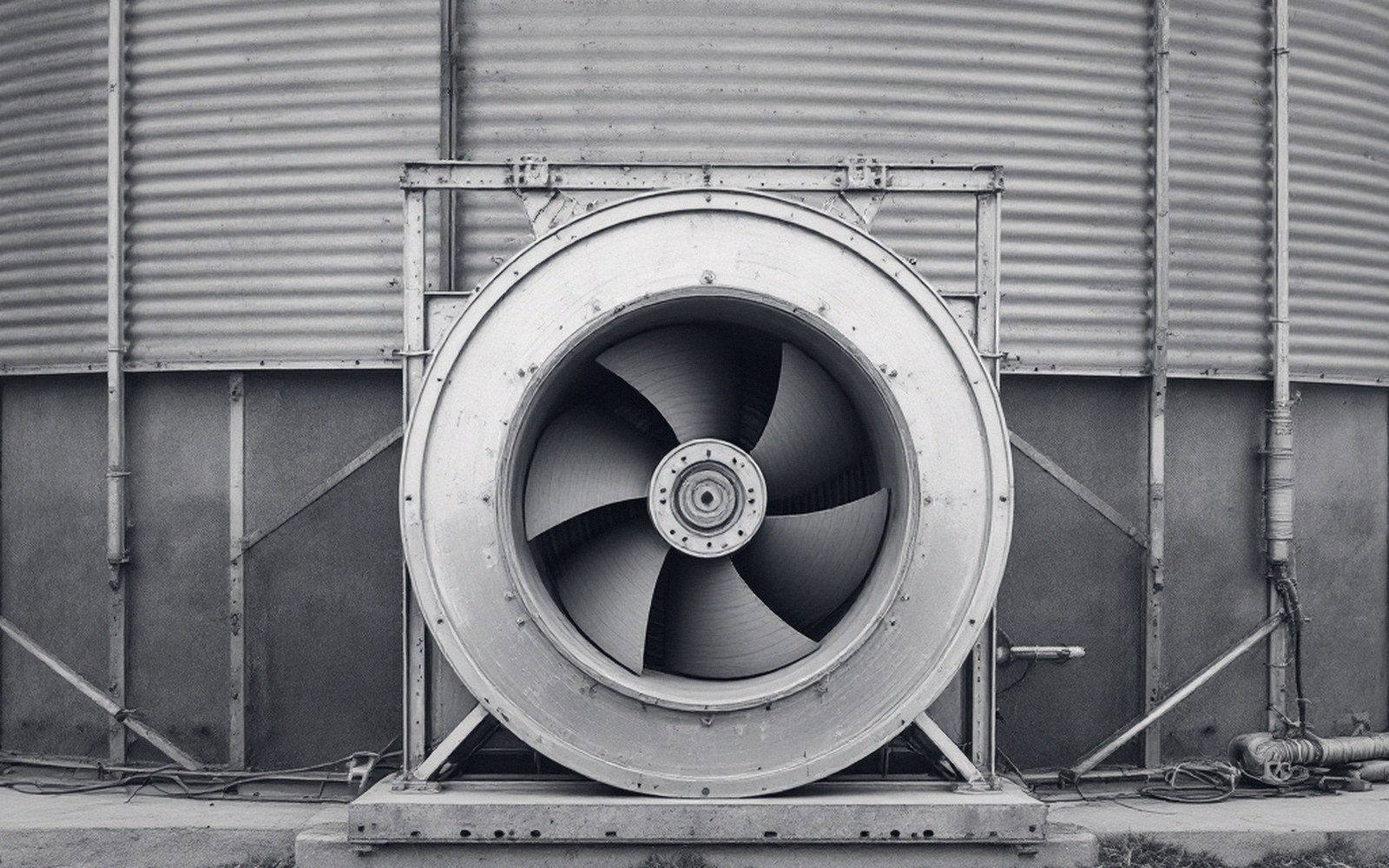
The fan does two different jobs, and they are not interchangeable
A bin with a fan in the floor can move air at very different rates depending on what the fan is asked to do. That single fact explains almost every mistake made in on-farm storage: treating aeration and drying as the same process, just with the thermostat turned up.
Drying is aggressive. It pulls enough air through the grain mass to strip moisture — typically one to two cubic feet per minute per bushel, sometimes more, depending on the starting moisture and the target. The air has to be warm enough, or dry enough, or both, to carry water vapor out the roof vents before it equilibrates with the grain. This is an energy-intensive process run continuously, often with supplemental heat, until the grain reaches a safe storage moisture — around 13 percent for rice destined for milling, somewhat lower for long-term corn storage. Get the airflow wrong and you get a drying front that stalls midway up the bin, leaving wet grain sitting above dry grain while the fan runs and the fuel bill climbs.
| Term | What it is |
|---|---|
| Drying airflow | high volume, typically 1–2 cfm per bushel or more; continuous; often supplemental heat; job is moisture removal |
| Aeration airflow | low volume, typically 0.1 cfm per bushel or less; intermittent, night-run; job is temperature equalization, not drying |
| Drying front | the boundary inside the bin between dried grain below and wet grain above; must reach the top before the fan stops or the bin risks spoilage in the wet layer |
| Moisture migration | warm air rising through a cool grain mass deposits moisture near the top; aeration prevents this by keeping the whole mass at a uniform temperature |
| Safe storage moisture | the point below which microbial and insect activity is slow enough for long-term storage; varies by crop and storage duration |
Aeration is gentle. Its job is not to remove moisture but to move temperature — to equalize the grain mass so it tracks ambient conditions slowly, without developing hot spots or steep temperature gradients that drive moisture migration. The airflow rates are a fraction of drying rates, typically a tenth of a cubic foot per minute per bushel or less. Running that flow for a few hours a night when outside air is cool is enough to pull the grain temperature down through winter, which is exactly what the biology requires: cool grain is slow grain, and slow grain does not spoil.
The mistake is forgetting that the fan serves two separate strategies, and that running one when you mean the other costs money without doing the job.
The failure mode comes from confusing the two. Running a drying fan in aeration mode — briefly, intermittently, at ambient temperature — barely moves the drying front and can actually rewet grain near the top of the bin if cool moist night air is drawn through warm wet grain. Running an aeration system in continuous drying mode at rates it was never designed to sustain burns the motor and still does not dry the grain, because the static pressure through a full bin overwhelms a small aeration fan.
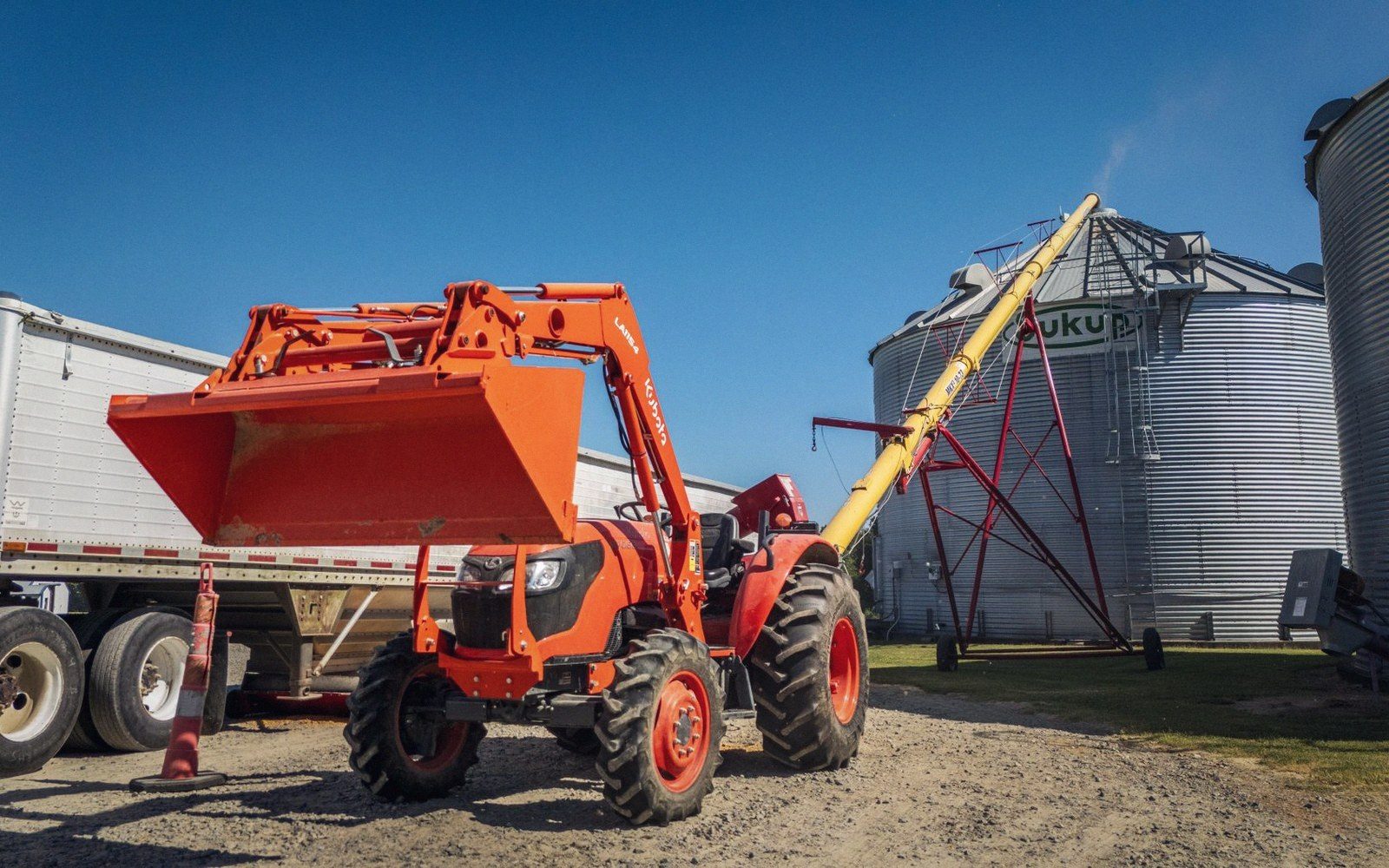
A bin built for both jobs usually has a larger drying fan that can be switched to low-speed aeration mode, or a separate small aeration fan that kicks in once the grain is dried and in long-term storage. The controls are straightforward: a thermostat or humidity controller that opens the aeration fan when the outside air is cooler than the grain, and shuts it when it is not. The physics is simple. The mistake is forgetting that the fan serves two separate strategies, and that running one when you mean the other costs money without doing the job.